Magnetic Wristband for Tools: Worth It for DIY?
The RAK Magnetic Wristband for Tools gives small screws and bits a place to stay within reach, with adjustable Velcro and magnetic sections around the band.
Affiliate disclosure: As an Amazon Associate I earn from qualifying purchases. This article may contain affiliate links, which means I may earn a commission at no extra cost to you.
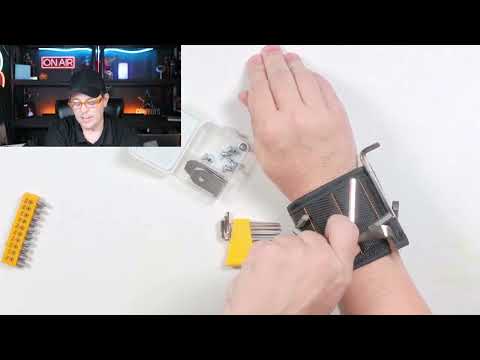
A magnetic wristband for tools is not complicated, and that is exactly its appeal. The RAK Magnetic Wristband for Tools gives the small metal pieces from a repair a temporary place to live: on my wrist, in plain sight, rather than on the floor, in the grass, in a pocket, or balanced somewhere they can roll away. I wrapped it on with the Velcro, placed a bit and several screws on its magnetic sections, and moved the band around. The screws I used stayed on, while the bit stood upright on one of the magnetic spots.
That does not make this a replacement for a toolbox or a full parts organizer. It is a convenience accessory for the few fasteners and small magnetic items that are most likely to disappear in the middle of a job. For the right DIY task, that modest role can make a meaningful difference to how smoothly the work goes.
A practical helper for DIY jobs involving small magnetic hardware. The adjustable fit worked well, and the magnetic sections retained the screws I tried during a brief movement check. Just remember that the whole band is not magnetic.
As an Amazon Associate I earn from qualifying purchases.
How this magnetic wristband for tools works
The basic design is a fabric wristband that closes with Velcro. I found the Velcro really strong, and I could set the fit tighter or looser without a struggle. That adjustability is central to the product’s usefulness. A wristband that shifts around or feels loose would be distracting when I am trying to handle a screw, bit, or tool; being able to snug it to my wrist lets it stay where I put it.
The most important detail is the layout of the magnetic areas. This is not a single, continuous magnetic strip from end to end. The magnetic spots are located around the stitched or seamed sections of the band. I checked an area between those sections and found that it was not magnetic. In practical terms, metal hardware needs to go onto one of the actual magnetic panels rather than simply anywhere on the fabric.
That distinction is worth understanding before buying because it sets the right expectation. The band gives me several holding zones distributed around my wrist, not an all-over magnetic surface. I can use those zones to separate a few removed screws, park a bit, or keep a small magnetic item nearby. But I need to be deliberate about where I place each item. If I set a screw on a non-magnetic gap, the band is not going to hold it.
I also found that the seams provide a useful visual cue. Instead of guessing where the holding areas are, I can look for the stitched sections and load hardware there. Once I know the pattern, the segmented layout becomes straightforward. It is less like a magnetic tray and more like a wearable series of small landing spots.
| Best for | DIY repairs and small magnetic hardware |
|---|---|
| Closure | Adjustable Velcro wrist strap |
| Magnetic layout | Segmented magnetic sections |
| Demonstrated hold | Screws and a bit |
| Listing claim | 10 embedded magnets |
My hands-on hold check with screws and a bit
For a product like this, the main question is simple: do the items stay put long enough to be useful? I put a bit onto one of the magnetic sections, and it stood upright. That was a clear, practical illustration of where the magnetic force is concentrated and how a small bit can be staged when I need it nearby.
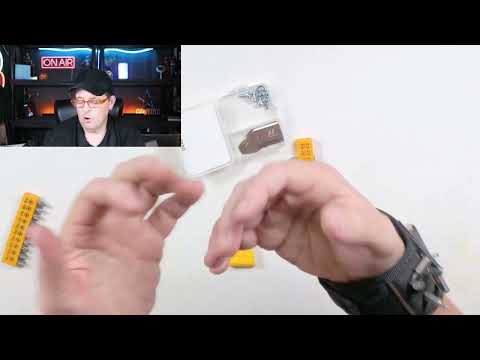
I then put several screws on the wristband and moved it around in a quick retention check. The screws I showed did not fall off. That is the behavior I want from a magnetic wristband for tools: take out a fastener, place it somewhere obvious, continue working, and have the fastener still there when it is time to put it back.
The check was brief, so I would not turn it into a claim about a maximum load, a specific amount of hardware, or every kind of movement. I did not establish how much weight the band can retain, how it behaves with unusually heavy hardware, or how it performs through a full day of work. What I can say is narrower and more useful: the small screws I placed on the magnetic sections remained attached while I moved the band, and the bit I used stood on a magnetic spot.
That makes the RAK band most convincing as a holder for small, common job pieces rather than a wrist-mounted tool rack. The product is at its best when I ask it to keep a handful of easy-to-lose items within reach. A screwdriver or another small magnetic tool may be part of the intended use, but I would keep expectations grounded in the demonstrated use: screws, a bit, and small magnetic items.
There is also a simple safety and convenience benefit to having a dedicated staging place. When I am working, a loose screw is easy to misplace, especially if I set it down while changing position. Keeping small hardware on the band is a better option than holding screws in my mouth. The wristband does not replace careful work habits, but it gives those tiny parts a more sensible home while I work.

Where the RAK wristband makes the most sense
I see this as a workflow tool for jobs where I repeatedly remove and reinstall a small number of magnetic fasteners. That could mean opening a panel, changing a part around a vehicle, assembling a project, or handling a repair with a few screws that need to stay organized. The band is not trying to organize an entire hardware collection. It is there for the pieces currently in my hands.
Automotive work is an easy example because a removed screw or bit can be awkward to set down when I am leaning into an area or shifting around the vehicle. Carpentry and home repair are similarly plausible uses when I am moving between the workpiece and a nearby surface. Yard and repair tasks can bring the same problem: the small part I need next is often the one most likely to vanish if I put it down casually.
A pocket can hold hardware, but it is not always the most convenient place for a screw I need again in a moment. A tray or magnetic parts dish can be helpful too, but it remains wherever I set it. The wristband’s differentiated advantage is proximity. It moves with me, so the hardware stays available without requiring a trip back to a bench, toolbox, or nearby table.
That advantage is strongest when the task involves only a manageable number of small magnetic pieces. I would use it as a temporary staging area: remove a screw, place it on a magnetic section, perform the next step, then retrieve the screw. The product becomes less compelling when the job calls for lots of parts, multiple part types, or a full range of tools. In those situations, a proper organizer, tool bag, or parts tray still has a different and necessary role.
RAK markets this model as having 10 embedded magnets for items including screws, nails, bolts, washers, and drill bits. I did not independently count the magnets, so I would treat that number as a listing claim rather than my own measurement. My hands-on observation supports the underlying design idea: there are multiple separated magnetic sections around the band rather than one continuous magnetic face.
What the segmented magnetic layout means in daily use
The localized magnetic zones are not a defect in themselves, but they do shape how I would use the wristband. I would not absentmindedly lay a screw anywhere across it. I would place hardware directly over a stitched magnetic section and make sure it has caught before returning to the job. After that, the placement becomes part of the routine.
There is a practical upside to having multiple zones. I can spread a few screws around the band instead of stacking everything in one place. If I have a bit and a couple of fasteners, I can give each a separate spot. That is not the same kind of organization as labeled compartments, and it will not identify which screw belongs where, but it keeps the items visible and physically separate enough for a small task.
The limitation is equally clear. The spaces between the seams are not magnetic, and the entire wristband should not be treated as a catch-all surface. I also did not test nonmagnetic metals, large tools, unusually heavy items, or extended-wear comfort. Buyers who need a product for those particular needs should not assume an answer from the quick hands-on use here.
Listing copy also says the band can be worn on a wrist, attached to a belt, or hung near a workbench. My use focused on the wrist, where I confirmed the adjustable Velcro fit and magnetic sections. I did not try the belt or workbench-hanging placements, so I cannot say how convenient those alternatives are in practice. The wrist use alone is the core reason I would consider it.
+ Pros
- Strong, adjustable Velcro closure makes the wrist fit easy to dial in.
- The demonstrated magnetic sections retained the screws I placed on the band during movement.
- Keeps small screws, bits, and similar magnetic items immediately within reach.
- Multiple magnetic zones provide several places to stage hardware.
! What to know
- The magnetic holding areas are segmented; the spaces between stitched sections are not magnetic.
- Best used as a convenient holder for small magnetic hardware, not as a replacement for a tool bag or parts organizer.
- RAK says the band has 10 embedded magnets, but I did not independently count them.
Who should consider this magnetic wristband
I would recommend the RAK Magnetic Wristband for Tools to DIYers and home repair users who routinely lose track of a few screws, bits, or other small magnetic items. It makes sense for someone who wants the next fastener immediately at hand while working on a car, a carpentry project, a repair, or equipment around the house and yard.
It is also a sensible choice for someone who already owns tool storage but wants a more immediate place to put the parts currently being handled. A toolbox keeps supplies together. A magnetic wristband keeps the next few pieces close to the work. Those are complementary jobs, not competing ones.
I would pass if the goal is to carry large or heavy tools, store a large number of parts, or organize nonmagnetic hardware. This product’s demonstrated strength is convenience with small magnetic pieces. Buyers expecting a replacement for a tool belt, parts bin, or full-size magnetic tray will be asking it to do a different job than the one I tried.
Fit is another buyer consideration. The Velcro let me make the band tighter or looser, and it felt strong during use. That supports its adjustability, but I did not evaluate comfort over extended wear or across a range of wrist sizes. The listing describes the strap as one-size-fits-most, while my firsthand takeaway is simply that its closure offers straightforward adjustment.
Buyer questions before choosing one
Will it solve every lost-fastener problem? No single accessory will. A magnetic wristband for tools is most helpful for keeping the current screws and bits from wandering away during a task. It does not replace a plan for organizing many parts, especially when different screw sizes need to remain sorted.
Do I need to use every magnetic section? No. The value is having several available spots. On a small job, one section for a bit and another for a couple of screws may be enough. The unused sections simply give me additional places to stage hardware when the work calls for it.
Should I expect every metal item to stick? I would not make that assumption. The useful category here is small magnetic or ferrous hardware. I did not test compatibility with nonmagnetic metals. If an item does not respond to a magnet, the wristband will not be a reliable holder for it.
Is it a comfort product or an organization product? Based on my use, it is primarily an organization and access product. The Velcro adjustment worked well for setting the band on my wrist, but my observation was not an extended comfort test. Its practical payoff comes from reducing the need to search for the small item I just removed.
Specs
| Spec | Detail |
|---|---|
| Product | RAK Magnetic Wristband for Tools |
| ASIN | B01HRCU3SW |
| Fit adjustment | Velcro closure |
| Magnetic surface | Distributed stitched/seamed magnetic sections |
| Magnet count | 10 embedded magnets claimed by RAK/listing |
| Claimed compatible items | Screws, nails, bolts, washers, and drill bits |
| Claimed outer material | 1680 ballistic nylon |
| Claimed alternate placement | Wrist, belt, or workbench hanging |
How I scored the RAK Magnetic Wristband
I scored fastener retention highly because the screws I placed on the magnetic sections remained on during the brief movement check. I also scored fit adjustment highly because the Velcro was strong and made it easy to set the band tighter or looser. Those are the two core functions I directly used, and both worked as expected.
Job-site convenience scores well because the whole point is to keep small hardware immediately accessible. The wrist placement is especially useful when I do not want to keep setting screws on a surface and retrieving them later. It is a small improvement in process rather than a dramatic new capability, but small process improvements can be worthwhile on repetitive DIY tasks.
Magnetic coverage receives a lower score because the useful areas are segmented. The seams provide multiple magnetic spots, yet the spaces between them are not magnetic. That is a manageable limitation once I understand it, but it prevents the band from functioning like one uninterrupted magnetic surface.
Scorecard
The screws I placed on magnetic sections stayed on during a brief movement check.
Strong Velcro made tight or loose adjustment simple.
Keeps commonly lost small hardware right at hand.
Useful multiple zones, but the full band is not magnetic.
FAQ
Does the RAK magnetic wristband actually hold screws?
Yes. I put several screws on the magnetic sections and moved the band around in a brief retention check. The screws I showed did not fall off. As with any segmented design, placement matters: put the screws on the magnetic sections rather than the gaps between them.
Is the whole RAK wristband magnetic?
No. I found that the stitched or seamed sections were magnetic, while an area between them was not. Think of it as several magnetic holding spots around the wristband, not one continuous magnetic strip.
Can the RAK Magnetic Wristband fit different wrist sizes?
It closes with adjustable Velcro. I found the Velcro strong and could make the fit tighter or looser. I did not test long-term comfort or a broad range of wrist sizes, but the closure itself was easy to adjust.
What can I put on a magnetic wristband for tools?
Small magnetic items are the natural fit. I used screws and a bit. RAK also markets the band for items such as nails, bolts, washers, and drill bits, though I only directly tried the screws and bit described here.
Can it replace a toolbox or parts tray?
No. I would use it alongside normal storage, not instead of it. The wristband is a temporary at-hand holder for the handful of small pieces involved in the current step of a job.
Can I use it for large or heavy tools?
I would not buy it with that expectation. I did not establish maximum holding strength or test large, heavy tools. The demonstrated use is small screws, a bit, and similar magnetic hardware.
Final recommendation
The RAK Magnetic Wristband for Tools earns its value by addressing a familiar annoyance without overcomplicating it. I found the Velcro closure strong and easy to adjust. The magnetic spots at the stitched sections held the screws I tried during movement, and a bit stood upright on one of those spots. For a DIY project with a few magnetic fasteners, that is the behavior that matters.
The key is buying it for its actual role. This is a wearable staging area for small magnetic hardware, not a universal magnetic surface or a replacement for organized tool storage. If that matches the way you work—and especially if loose screws and bits regularly slow you down—it is a practical accessory to keep on your wrist.
As an Amazon Associate I earn from qualifying purchases.