Cordless Handheld Pool Vacuum: Worth It for Spot Cleaning?
The Inhulk cordless handheld pool vacuum gives you direct control over dirty corners, stairs, and other pool spots a robot can miss.
Affiliate disclosure: As an Amazon Associate I earn from qualifying purchases. This article may contain affiliate links, which means I may earn a commission at no extra cost to you.
If your pool robot keeps missing corners, hanging up under stairs, or wandering around while one dirty patch sits there untouched, a cordless handheld pool vacuum can be a much more practical answer than waiting on automatic navigation. I used the Inhulk cordless handheld pool vacuum cleaner in my above-ground pool, and its main advantage was immediate: I controlled exactly where it cleaned.
This is not a replacement for a robot if your goal is to start a cleaner and walk away while it handles the full pool. It is a manual, cordless tool for the moments when the mess is concentrated in a place a robot cannot navigate well. I could work along the edge, move into a corner, reach beneath the stairs, and stay on one problem area for as long as it needed attention.
That distinction matters when choosing a cordless handheld pool vacuum. The appeal is not autonomous coverage. The appeal is that I could see debris or green buildup, put the brush head directly over it, and decide how long to keep working that spot. For routine whole-pool maintenance, a robot still has a role. For cleanup around obstacles and awkward pool features, this Inhulk fills a different gap.
A strong pick for targeted above-ground pool cleaning. It gives you manual control where a robot gets stuck or cannot reach, and the thicker filter did a better job catching small debris in my use.
As an Amazon Associate I earn from qualifying purchases.
| Type | Cordless rechargeable handheld pool vacuum |
|---|---|
| Best for | Targeted cleaning in above-ground pools, corners, stairs, and edges |
| Reach | Telescoping pole estimated at about 7.5 ft extended |
| Filtration | Two fine-mesh and two thicker filter bags included |
| Alternate setup | Short handle for hot tubs or smaller pools |
Why a cordless handheld pool vacuum can beat a robot in problem areas
I have a robot in my pool, and robots are useful—until they are not. During this cleaning session, mine got stuck and stayed in one area rather than dealing with the sections I actually wanted cleaned. That is the practical contrast. A robot follows its own route and has to navigate around the pool layout. This Inhulk is a manual tool, so I could go straight after the dirty spots.
I targeted pool edges, corners, and the area underneath the stairs. The space under stairs is one of those annoying locations where debris and green buildup can collect while a robot struggles to fit or navigate. With the long pole extended, I had enough reach to work well out into my above-ground pool without climbing in.
The advantage is especially clear when a pool has a single visible issue rather than a general layer of debris across the entire floor. If I could see small bugs and tree debris gathered along an edge, I did not have to wait for a robot to find that section. If I wanted to revisit a corner, I could do it immediately. The handheld format turns cleaning into a direct, deliberate task instead of a navigation problem.
Manual control also let me change my approach as I moved. I could make a broad pass over an open area, then slow down near an edge or under the stairs. That is not necessarily faster for every large cleanup, but it is useful for the small, frustrating jobs that tend to linger after an automatic cleaner has done its usual cycle.
Brush-head control is the reason this works for corners and stairs
The brush head is a major part of why this worked well for targeted cleaning. It has a large intake opening, small bristles around the head, and side/corner brush pieces. Those side brushes let me work into corners and around awkward edges instead of only making broad passes across open floor space.
Along the edge and around a corner, I could use the side brush to address the places where debris tends to settle. Beneath my stairs, I was able to guide the head into an area my robot had difficulty reaching. A handheld vacuum will not make every pool obstacle disappear, but being able to point the head exactly where I wanted it was the advantage in this pool layout.
I also liked that I could pause over one section and scrub it. I operated it one-handed for part of the cleaning, which was convenient for light, controlled passes. When I wanted more pressure on the brush head, I could use two hands. That flexibility is important because spot cleaning is rarely just about passing over a clean, open floor. Sometimes the useful move is to stay on a small area instead of moving on.
The bristles and manual steering are therefore better thought of as tools for targeted contact than as a promise that the vacuum will solve every type of pool buildup. I used them to dwell on visible problem spots. I did not measure how effectively the unit removes settled algae, so I cannot give it a performance claim for that specific job. What I can say is that the brush head gave me a controlled way to work the areas I chose.
My hands-on setup with the Inhulk pool vacuum
Setup was straightforward. The unit is cordless and rechargeable, with a charging port, an on/off control, and green status lights for operating and charging status. I attached the head and used the included telescoping pole for the above-ground pool.
The pole was one of my favorite practical details. Fully extended, I estimated it at roughly 7.5 feet. That estimate was visual rather than tape-measured, but it gave me useful reach into the pool. The pole also collapses down for storage. That matters because a tool that is awkward to store can end up being a tool that does not get pulled out for quick cleanup jobs.
For my pool, the extended pole was the right configuration. It allowed me to stand at the side and reach the edge, corner, and under-stair areas I wanted to clean. The pole can be shortened when it is time to put the vacuum away, which makes it more manageable than leaving a long fixed handle in a storage container.
There is also a short-handle configuration. That should be useful in a hot tub or smaller pool, where the long pole could be unnecessary or simply get in the way. It is a helpful bit of flexibility, although I used the longer setup for this above-ground pool session. Buyers with more than one water feature may appreciate not being locked into one handle length.
As with any rechargeable pool tool, battery details should be part of the buying decision. I did not measure runtime, charging time, cleaning coverage per charge, suction output, or motor specifications. I would confirm those details against the demands of your pool size and the way you expect to use a handheld cleaner. Based on my use, the more grounded reason to consider this model is targeted reach and control, not an assumed runtime number.

The filter bags are not interchangeable for the same job
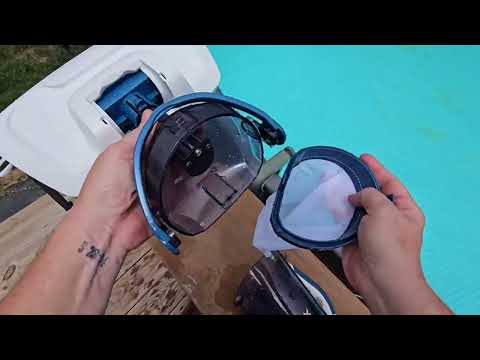
The Inhulk comes with four filter bags: two fine-mesh bags and two thicker, sock-like bags. I would not treat those as duplicates. They change what this cordless handheld pool vacuum is best suited to collect, and choosing the bag based on the debris in your pool is one of the more useful decisions here.
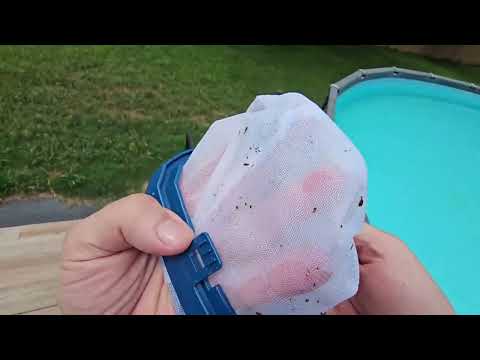
I started with the fine-mesh bag and cleaned targeted areas around the pool. When I took it out, it had collected small bugs and debris from the trees around my pool. For ordinary debris, including leaves, bugs, and similar larger material, that is the bag I would reach for first. It is the sensible everyday option when the job is visible debris rather than very fine material.
Then I installed the thicker filter and went back over the same locations. It collected additional debris that was visibly smaller. That comparison was the most useful result from my cleaning session. If your pool has a lot of fine material in these trouble spots, the thicker bag is the better choice. If you are mainly chasing leaves and bigger debris, the standard fine-mesh option is the more logical starting point.
The distinction is worth taking seriously rather than treating the filters as backups. The fine-mesh bag is intended for debris, while very small particles can pass through it. The thicker filter is the better match when tiny debris is the priority. Scotting through a pool with the wrong bag does not mean the vacuum is ineffective; it may simply mean the collection setup does not match the material you are trying to remove.
The thicker filter caught more visibly small debris in my same-area comparison, but that was not a quantified filtration test. It is a practical observation from revisiting the locations I had already cleaned. It does give a clear buyer takeaway: use the bag choice to match the cleanup job instead of expecting one filter to handle every kind of debris equally.
Cleanup after vacuuming is simple, but it is still hands-on
After cleaning, I turned the vacuum off and held it at the side of the pool. A rubber auto-release flap on the bottom lets retained water drain out. I found that allowing roughly 20 to 30 seconds let the water empty before I removed the filter bag. That is a small feature, but it makes the transition from cleaning to emptying more practical and avoids needlessly carrying retained pool water away from the pool edge.
The filter bag still needs attention after use. I removed the bag, rinsed it out, shook out the debris, and put it back on. This is normal for a handheld pool vacuum, but it is a real part of ownership. Anyone looking for completely hands-off maintenance should understand that manual steering during the job is followed by manual filter cleanup afterward.
For me, that tradeoff is reasonable when the job is a stubborn corner, the area below stairs, or a small debris patch. The vacuum is most compelling when the time spent steering and rinsing saves frustration compared with waiting for a robot that cannot access the area. It is less compelling if you expect it to behave like an automatic whole-pool cleaner with no follow-up work.
+ Pros
- Direct manual control for targeted dirty areas
- Side brushes reached corners and areas under pool stairs
- Telescoping pole provided useful above-ground pool reach and stores shorter
- Thicker filter caught additional visibly smaller debris in my comparison
- Brush head lets you dwell on and scrub a problem spot
− Cons
- Requires manual steering and filter rinsing after cleaning
Who should buy this cordless handheld pool vacuum?
I would look at this Inhulk model if you have an above-ground pool and need a manual cleanup tool for specific trouble spots. It is especially useful if your robot cannot reach beneath stairs, cannot get into corners, or gets confused by your pool layout. It also makes sense for pool owners who want a direct response when they see debris collect in one place.
This is a good fit if you prefer to solve the immediate problem rather than wait for an autonomous cleaner to eventually pass through. I could go directly after bugs, tree debris, edges, corners, and the under-stair space. The long, adjustable pole made that approach practical from the side of my pool, and the side brushes added useful control in tight spots.
It also fits buyers who have different kinds of debris at different times. The included fine-mesh and thicker bags give you a sensible choice between ordinary larger debris and visibly smaller material. Rather than buying a separate accessory for each situation, I had both bag styles available with the vacuum.
The short-handle option gives the product another possible role in a hot tub or compact pool. You are not forced to use the long pole for every task. That flexibility is useful for someone with a smaller water feature, although the main strength I saw was its use as an extended-reach spot cleaner in an above-ground pool.
Who should skip it or set different expectations?
Skip this style of vacuum if your only goal is fully automatic, hands-off whole-pool cleaning. This product requires manual steering, and you will need to rinse the filter bag after use. That is not an unusual drawback for a handheld vacuum; it is the tradeoff for choosing where the head goes and how long it stays there.
I also would not buy it based on assumptions about battery capacity or power. I did not establish battery runtime, recharge time, coverage per charge, measured suction performance, long-term durability, replacement-filter availability, or compatibility with different pool surfaces. Those unanswered points may matter more for a large pool or for someone planning frequent, lengthy cleaning sessions.
Finally, do not expect the fine-mesh bag to be the answer to every kind of fine material. In my comparison, the thicker sock-like filter collected additional visibly smaller debris after I revisited the same areas. If very small particles are your regular concern, make that thicker filter part of your normal setup instead of treating it as an occasional extra.
Specs
| Spec | Detail |
|---|---|
| Power type | Rechargeable cordless operation |
| Controls | On/off control with green operating/charging indicator lights |
| Brush head | Large head with intake opening, small bristles, and side/corner brushes |
| Pole | Adjustable telescoping pole; approximately 7.5 ft estimated maximum length |
| Handle options | Short handle and extendable-pole configurations |
| Filter bags | Four included: two fine-mesh and two thicker sock-like bags |
| Drainage | Bottom rubber auto-release flap for draining retained water |
Scorecard
Excellent manual control over specific dirty areas.
Side brushes and long pole helped with corners and under stairs.
Two bag styles suit larger and smaller debris.
Straightforward, but it still requires hands-on steering and rinsing.
Pole shortens down when it is time to put it away.
Frequently asked questions about this Inhulk vacuum
Can this cordless handheld pool vacuum clean under pool stairs?
Yes, I used it beneath my above-ground pool stairs, which was an area my robot had difficulty reaching. The extended pole and manually controlled brush head made it possible to target that space directly. The side/corner brush pieces were useful for working around the awkward edges in that location.
Which filter bag should I use for leaves and larger debris?
Use the fine-mesh bag for ordinary debris such as leaves, bugs, and larger particles. In my cleaning, it collected small bugs and tree debris from around the pool. It is the practical default when the job is a normal debris pickup rather than very small material.
Which filter bag is better for very small debris?
The thicker, sock-like bag is the better option for small debris. When I cleaned the same locations after using the fine-mesh bag, the thicker filter caught additional visibly smaller material. That is the filter I would choose when fine debris is the main concern.
Does it come with a pole and a short handle?
Yes. It includes an adjustable telescoping pole, plus a short-handle option for a hot tub or small pool. I estimated the pole at about 7.5 feet when fully extended, and it shortens for storage.
Do I need to empty the filter after every use?
You will need to remove and rinse or shake out the filter bag after cleaning. The vacuum also has a bottom drain flap, so I let water drain out at the pool edge before removing the bag. That makes cleanup more manageable, but it does not eliminate the need to tend to the filter.
Can I use this one-handed?
Yes, I operated it one-handed during part of my cleaning. For more pressure on the brush head, I could also use two hands. The right approach depends on whether you are making a light pass or spending more time working one spot.
Final take: a useful companion to an automatic cleaner
The Inhulk cordless handheld pool vacuum cleaner is a useful companion to a robot, not necessarily a replacement for one. Its value is control. I could get into corners, work along edges, reach beneath stairs, and spend extra time on one dirty spot instead of watching a robot get stuck nearby.
The adjustable pole, short-handle option, brush head, and two filter styles give it flexibility for targeted jobs. The most convincing result from my use was the filter comparison: after the fine-mesh bag picked up ordinary debris, the thicker bag captured additional visibly smaller material from the same locations.
If your pool has places an automatic cleaner misses, this is the kind of tool that fills the gap. Buy it for manual spot cleaning, awkward areas, and control over your passes—not for a hands-off replacement for full-pool automation.
As an Amazon Associate I earn from qualifying purchases.