WAGRIX Dog Allergy Chews: Worth a Measured Trial?
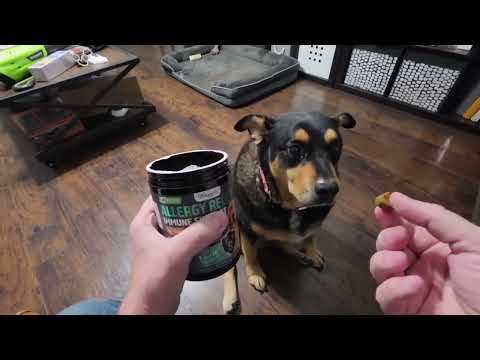
WAGRIX dog allergy chews come in a 200-count jar with weight-based directions and small heart-shaped pieces. Dallas was interested in the smell but selective about taking one from the open container.
Affiliate disclosure: As an Amazon Associate I earn from qualifying purchases. This article may contain affiliate links, which means I may earn a commission at no extra cost to you.
If you are comparing dog allergy chews, WAGRIX is the kind of product where the everyday details matter as much as the broad allergy-support promise. I wanted to know what the jar was like, whether the serving directions were understandable, how large the chews appeared, and what Dallas did when I opened the container. Those are practical questions when the goal is to give a supplement consistently rather than leave it unused in a cabinet.
This was a first look, not a long-term allergy trial. WAGRIX was sent to me by the brand, and Dallas had not tried it before. I could assess the packaging, aroma, chew shape, label guidance, and her immediate interest. I cannot tell you from this first interaction whether these chews change scratching, paw licking, ear irritation, skin concerns, digestion, or any other allergy-related issue over time.
WAGRIX is a practical chew-format supplement to consider for a measured trial if you want clear serving guidance and a large 200-count jar. Just don’t buy it expecting instant allergy relief: I had only a first interaction with Dallas, not a long-term symptom result.
As an Amazon Associate I earn from qualifying purchases.
My first impression of WAGRIX dog allergy chews
The product arrives in a jar-style container that I could open and close again, which is the sensible format for a 200-count supplement. There is no complicated setup here: the chews are in the jar, the directions are on the container, and each piece can be handled on its own. For a product intended to become part of a routine, that straightforward presentation is a genuine plus.
As soon as I opened the jar, I noticed an aroma. Dallas noticed it too. She came over and smelled the chews right away, so there was clearly something about the scent that caught her attention. That is a more useful initial observation than simply seeing “chicken flavored” on a label, although it still is not a promise that every dog will want to eat them.
Up close, the pieces are small and heart-shaped. Their individual size is important because it makes them easy to pick up and offer one at a time. They look more like a small reward-style treat than a tablet that needs to be hidden in another food. If your dog is wary of supplements, a chew that can fit into an existing reward routine has a practical advantage over a format that demands a separate feeding ritual.
Dallas was interested enough to investigate the smell, but she did not take a chew directly from the open container. That was the honest first reaction. Dallas is usually pretty good about this type of thing, so I would not assume that a chicken-flavor claim automatically means universal acceptance. At the same time, one hesitant moment at an open jar does not settle whether she would accept a chew in a different context or after a few normal introductions.
| Format | Small heart-shaped soft chews |
|---|---|
| Count | 200 chews per jar |
| Serving guidance | Weight-based daily directions on the label |
| Flavor claim | Chicken flavored |
| Best use | Individual reward-style supplement treats |
Why the treat-style format is WAGRIX’s practical strength
The best reason to consider these dog allergy chews is convenience, not an expectation of an overnight health change. Supplements only work as part of a routine if a dog will take them and an owner can remember to offer them. WAGRIX’s small individual chews give you a simple way to make that routine feel familiar: use one at a time during an ordinary reward moment instead of turning it into a big production.
That was the approach I suggested with Dallas. Rather than putting a group of chews into a food bowl, I tossed one for her to catch. The point is not that every dog needs to take a supplement this way. It is that the format gives an owner options. A sit, a recall, or another easy behavior can provide a natural moment to offer one. For dogs that are suspicious of a new food, separating the chew from the normal bowl may also make it easier to see whether they are actually interested.
I would not overread Dallas’s first response in either direction. Her immediate sniffing is encouraging from a curiosity standpoint, but she skipped the open-jar offer. A dog that reliably eats almost anything may take one with no hesitation; a particularly selective dog may need a calmer introduction. The useful takeaway is that these are manageable, small pieces rather than large biscuits that would need to be broken up before offering them as individual rewards.
There is also a difference between initial palatability and long-term acceptance. I only had this first interaction with Dallas, so I cannot say whether she would consistently eat these day after day. If reliable acceptance is your top purchase criterion, treat this first look as a helpful signal about the scent and format, not as a guarantee about your own dog. Your dog’s normal eating habits will matter more than the label’s flavor description.
Serving directions were easy to read, but the daily amount matters
I checked the feeding guidance on the container, and it uses a dog’s weight to determine the daily serving. Dallas is over 80 pounds, and the label indicated that she could have four chews. That is clear enough to understand without trying to calculate a serving from scratch, which is one of the strongest usability points of the product.
Weight-based guidance also means a 200-count jar has a very different meaning for different households. The count sounds generous, and it can be. But a small dog receiving fewer chews will make that supply last much longer than a large dog at the upper end of the directions. I estimated that a dog receiving one or two chews per day could get a couple of months from the container. That estimate is just simple serving math, not a fixed promise for every dog.
For a dog receiving one chew per day, 200 chews represents a much longer run than a couple of months. At two daily, it is about 100 days. A dog using four chews daily would go through the same jar much faster. This is why I would look at the applicable serving row before treating a 200-count container as either a bargain or a long-term supply. The number of pieces alone is not the decision; the daily amount for your dog is the decision.
Because this is a new supplement for a dog, I mentioned starting with one or two per day to see how the dog gets used to it and what it does to their gut. That is a cautious introduction idea from my first look, not a replacement for the label directions or veterinary advice. If your dog has persistent symptoms, a sensitive stomach, a known food issue, or is already taking medication, speak with your veterinarian before adding a new supplement.
That caution is especially relevant with allergy-related concerns. Itchy skin, paws, and ears can have more than one cause, and a chew should not be treated as a diagnosis. A product may be convenient to offer while you monitor your dog, but convenience is not the same as knowing what is behind the symptoms. Buyers looking for a simple support product should keep that distinction in mind.


What WAGRIX claims versus what I observed with Dallas
WAGRIX is positioned as a six-in-one allergy-support chew. The product presentation associates it with skin, paws, ears, gut health, immune support, and seasonal comfort. It is also described as chicken flavored, and the no-additives statement was part of the product discussion. These are manufacturer or product claims. I am including them because they explain what the chews are intended to be used for, not because I established those outcomes during this first look.
My direct observations are narrower and more useful for setting expectations. The jar was resealable. I noticed a smell as soon as I opened it. The chews were small and heart-shaped. The serving guidance was based on weight. Dallas smelled them immediately, did not eat from the open container, and I used a tossed chew as a reward-style offer. Those are the real product-use details I could assess firsthand.
What I did not assess was whether the product reduces itching, improves paw licking, helps with ears, changes skin condition, supports digestion, or provides an immune benefit. Dallas had not used it before this. I also did not establish how she tolerated it after regular use or whether she would take it normally over time. Those are the questions that matter most for an allergy-support supplement, and they need a measured trial rather than an opening-the-jar interaction.
I also would not expect a quick answer from this kind of product. I said it could take roughly two weeks before an owner might notice anything. That is an expectation to use when deciding whether a trial is worthwhile, not a guaranteed timeline or a health claim. If you choose to try WAGRIX, judge it over an appropriate period with realistic expectations rather than drawing a conclusion from one treat.
Who should consider these dog allergy chews?
WAGRIX makes the most sense for an owner who wants a chewable supplement format and appreciates clear, weight-based daily directions. It may also suit someone who prefers to offer a supplement as an individual reward rather than mix powder into meals or hide a larger tablet. The small heart shape and 200-count jar are the tangible reasons the product feels usable for that purpose.
It is also a reasonable product to consider if you want to take a measured approach. The jar offers enough chews that, depending on the serving size, you have room to see how your dog accepts the format over more than a day or two. That does not make it an assured answer for allergy concerns; it simply makes the packaging and serving system practical for a trial.
I would be more careful if your dog has a known sensitivity to chicken or other food ingredients. WAGRIX is marketed as chicken flavored, and I did not independently verify the full ingredient list during this first look. Check the current container label before offering any new chew to a dog with known dietary sensitivities. The same applies to dogs with digestive concerns: a new supplement deserves a thoughtful introduction rather than an assumption that it will suit every dog.
I would also set expectations differently for a dog that is extremely picky. Dallas’s response shows why. She was clearly interested in the aroma, yet she did not take one from the open jar. If your dog routinely rejects new treats, the reward-style use case may be more appealing than simply offering the jar. Still, there is no way to know whether an individual dog will accept it consistently until that dog tries it.
+ Pros
- Small heart-shaped chews are easy to handle individually as reward-style treats
- Weight-based serving directions were straightforward
- 200-count jar can provide a multi-month supply at lower daily serving amounts
- Dallas immediately showed interest in the aroma
− Cons
- Dallas did not take a chew directly from the open jar during the first interaction
How I would decide whether the 200-count jar is right for my dog
Before buying, I would make the decision in three steps. First, I would check the current label for the serving range that matches my dog’s weight. Second, I would divide 200 by the number of chews I expect to offer per day. Third, I would ask whether a reward-style chew is actually easier for my dog than other supplement formats. This avoids buying based on the large number on the front of the jar alone.
For example, the jar could be a sensible supply for a dog using one or two chews daily, which is the range I discussed when estimating a couple of months of use. For Dallas, whose label guidance was four chews because she is over 80 pounds, the supply calculation changes. The product is not less convenient for a bigger dog, but the jar will naturally be used faster.
I would also decide whether I am comfortable evaluating a supplement without demanding an instant visible change. These chews are positioned for concerns that can be complicated and ongoing. The practical benefits I saw were the shape, single-chew handling, readable weight-based guidance, scent that drew Dallas over, and the potential to integrate the chew into a reward routine. The health outcome remains an individual trial question.
Should you try WAGRIX dog allergy chews?
Yes, if what you want is a straightforward chew supplement to try over time and you understand the limits of this first look. The jar is easy to work with, the heart-shaped chews are easy to handle one at a time, and the weight-based directions were simple to follow. Those are meaningful qualities when daily consistency is the goal.
Dallas gave the product a mixed but useful initial response. She came over to smell the chews as soon as I opened the jar, which suggests the aroma caught her attention. She did not take one directly from the container, so I would not present WAGRIX as an automatic hit with every dog. I liked the option of offering an individual chew as a tossed reward instead.
My recommendation is to view WAGRIX as a practical trial-format product, not a magic answer in a jar. Follow the current label, consider your dog’s weight when calculating how long 200 chews will last, and pay attention to acceptance and tolerance as you introduce any new supplement. For ongoing or significant allergy concerns, bring your veterinarian into the conversation rather than relying on a chew alone.
Specs
| Spec | Detail |
|---|---|
| Product | WAGRIX Dog Allergy Relief Chews |
| Container count | 200 soft chews |
| Chew shape | Heart-shaped |
| Packaging | Resealable jar |
| Flavor claim | Chicken flavored |
| Serving method | Weight-based daily guidance |
| Brand positioning | Six-in-one allergy-support chew |
Scorecard
Clear weight-based guidance on the jar.
Small individual chews work well for rewards.
Dallas smelled them but skipped the open jar.
200 chews can last months at lower doses.
Long-term allergy results were not established.
Frequently asked questions about WAGRIX
How many WAGRIX chews should a dog get?
The container uses weight-based daily serving directions. Dallas is over 80 pounds, and the label indicated she could have four chews. Use the serving guidance on your current container because the right daily amount depends on your dog’s weight.
Did Dallas like the WAGRIX chews?
Dallas immediately showed interest in the smell after I opened the jar. She did not take a chew directly from the open container during this first interaction. I instead offered a chew as a tossed reward, which is one reason I see the small individual format as useful.
Do WAGRIX dog allergy chews work for itchy skin or paws?
WAGRIX markets the chews for allergy-related support involving areas such as skin, paws, and ears, but I did not use them with Dallas long enough to establish an outcome. I cannot say from this first look whether they changed itching, licking, ears, skin, digestion, or immune-related concerns.
How long does a 200-count jar last?
It depends on your dog’s daily serving. I estimated that one or two chews per day could make the jar last a couple of months. A dog receiving more chews daily will use it faster, so check the weight-based directions and do the simple count-per-day calculation.
Are these chews meant to produce quick results?
I would not buy them expecting an immediate answer. I mentioned that owners may need roughly two weeks before noticing anything, but that is an expectation for a trial and not a guaranteed result. Dallas had not used the chews before this first interaction.
Can WAGRIX chews be used as training rewards?
They can be offered individually as reward-style treats. The chews are small and heart-shaped, and I tossed one for Dallas to catch. That format may be especially convenient for owners who prefer to work a supplement into an existing sit, recall, or reward routine.
Final recommendation
WAGRIX is worth considering when you want dog allergy chews with a treat-like format, a resealable 200-count jar, and easy-to-read weight-based serving guidance. My firsthand take is focused on usability: the chews are small, Dallas noticed the aroma immediately, and the individual format works naturally as a reward option.
Just keep the product’s role in perspective. I did not complete a long-term use trial with Dallas, so I cannot connect these chews to a specific allergy-relief result. If you are comfortable with a measured trial and your dog’s current label guidance makes the supply practical, WAGRIX has a convenient format worth considering.
As an Amazon Associate I earn from qualifying purchases.