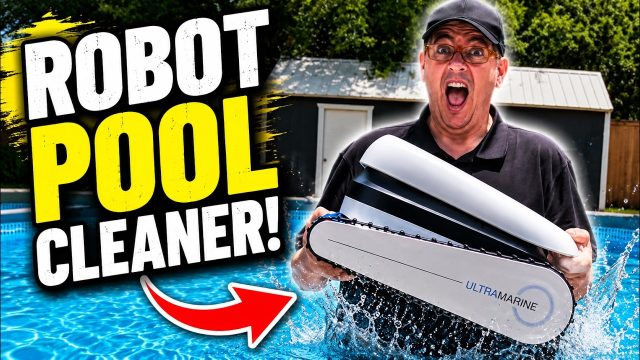
Aiper Scuba SE Review: Easy Above-Ground Pool Cleanup?
The Aiper Scuba SE kept the routine simple in my 24-foot above-ground pool: drop it in, let it roam, hook it out at the wall, then rinse the filter.
Affiliate disclosure: As an Amazon Associate I earn from qualifying purchases. This article may contain affiliate links, which means I may earn a commission at no extra cost to you.
In this Aiper Scuba SE review, I focused on the routine chore that matters most to me: keeping the floor of my 24-foot round above-ground pool from turning into a collection point for small debris. I switched this cordless robot on, lowered it into the pool, let it move around the liner, then retrieved it at the wall and rinsed its filter. My pool was not especially dirty, so this is not a claim about rescuing a neglected pool. It is a firsthand look at whether the Scuba SE makes light, everyday pool-floor cleanup easier.
The short version is that its basic workflow was appealing. There was no hose to manage during the cleaning run and no manual vacuum head to guide across the floor. Once the robot was on and submerged, it moved independently. At the end, it was parked against the sidewall where I could reach it with a hook. The housing opened easily, even with one hand, and the removable filter and collection pieces were simple to rinse. For an above-ground pool owner looking for a low-fuss maintenance helper, those practical details are the point.
A practical cordless option for routine above-ground pool debris pickup, especially if you want easy wall-side retrieval and fast filter cleanup.
As an Amazon Associate I earn from qualifying purchases.
Aiper Scuba SE review: how it fit my above-ground pool routine
The Scuba SE is a smaller robotic pool vacuum intended for above-ground pools. I used it in my 24-foot round above-ground pool, which is useful context for everything that follows. A round pool does not offer a neat rectangular cleaning path, and I was interested less in a perfect-looking route than in the basic experience of letting a cordless cleaner work the floor without my having to stand there moving a manual vacuum.
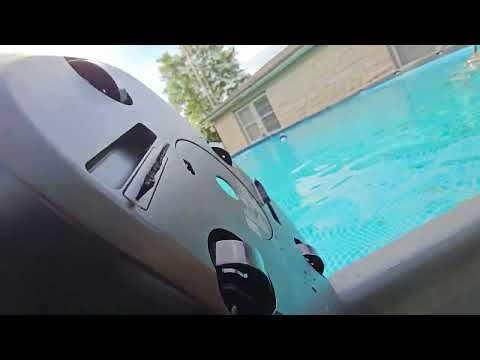
It is deliberately simple in its physical setup. The power button is on the bottom of the unit, and the charging connection is on the bottom as well. I turned it on at that bottom button, then put it in the water. I like to sink it and let it get full of water before allowing it to begin its run. After it was submerged, the front and rear flaps moved it across the pool floor.
From there, it traveled around the liner in a zigzag-style pattern. When it reached a sidewall, it changed direction and headed back the other way. That movement is not something I would describe as a mapped or app-controlled cleaning plan; it is a straightforward autonomous roam across the floor. For routine maintenance, that simplicity is a feature rather than a complication. The robot is meant to take a recurring job off my hands, not give me another device to configure before I can get on with the rest of the day.
That distinction also sets reasonable expectations. My run was with a pool that was not very dirty, and I found small debris afterward. If your main frustration is the light material that settles between regular pool-care tasks, a cordless floor robot like this has a clear role. If you are facing a pool loaded with big leaves, heavy algae, or a major settled mess, my use does not give me a basis to predict how it will handle that situation. I would treat it as a regular maintenance tool, not assume that my light-debris result translates to every cleanup problem.
| Pool type | Above-ground pools |
|---|---|
| My pool | 24-foot round above-ground pool |
| Operation | Cordless, autonomous pool-floor cleaning |
| Retrieval | Parks at sidewall for hook pickup |
| Cleanup | Rinseable filter and debris compartment |
| Stated runtime | Up to 90 minutes per full charge |
What the cleaning cycle looked like in my pool
After the unit was on and had filled with water, I could see the flaps at the front and back doing the work of moving it across the pool floor. It continued around the pool on its own, reversing after meeting the sidewall. That is the part of the experience that changes the character of routine cleaning: I was not steering a vacuum pole, tending a hose, or making each pass manually. I put the Scuba SE in the water and let it travel.
For an above-ground pool owner, the value of that hands-off period is not just novelty. Manual vacuuming can involve getting equipment out, connecting it, making slow passes, and then putting it away again. The Scuba SE reduces the in-pool portion to starting the robot and allowing it to work. It does not remove the need to inspect the pool or maintain the robot afterward, but it does remove the need for me to guide the cleaner during this kind of routine floor pass.
The claimed maximum runtime is up to 90 minutes on a full charge. I did not time a complete battery cycle in my pool, so I cannot attach a measured runtime to my use. The stated behavior is that the robot finds and parks against a wall when its battery gets down to roughly 10–15%. What I did observe is the useful outcome: after my cleaning run, it was parked at the sidewall rather than sitting somewhere difficult to reach in the middle of the pool.
Coverage is still an individual-pool question. I used the Scuba SE in one 24-foot round pool. I did not test it in pools with other shapes, slopes, wrinkles, obstructions, or different debris conditions, so I cannot say how consistently it covers every floor layout. Shoppers whose pool has unusual geometry should keep that limit in mind. My experience supports its basic movement and direction changes on my above-ground liner, not a universal coverage promise.
Sidewall parking made retrieval much less annoying
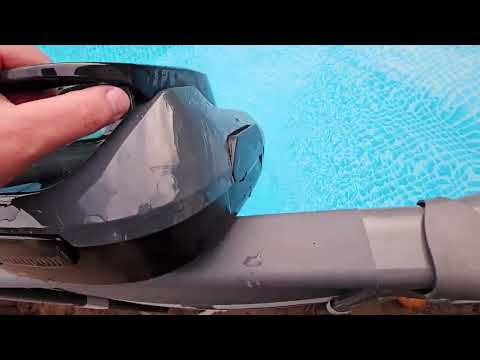
Retrieval is one of the most practical strengths I found. When the cleaning run was finished, the Scuba SE was parked against the sidewall. I used a hook to grab it and pull it up. That sounds like a small feature, but a cordless pool robot is much more convenient when its end position is reachable. In a round above-ground pool, having it waiting at the wall is a better finish than needing to improvise a way to fetch a stopped cleaner from farther out.
Before fully removing it, I held it above the water briefly so the water could drain out. That kept the removal tidier and avoided needlessly splashing water around the pool edge. It is a modest handling step, but it fits the product’s appeal: the whole process was straightforward from the moment I started the run through getting the robot out of the water.
I would separate this convenience from any battery claim. I saw the unit at the wall after the run, which is the firsthand result that matters for retrieval. I did not measure its charge level when it parked, so I am not treating the stated 10–15% threshold as something I independently verified. For a buyer, the practical takeaway is simply that sidewall parking worked in my use and made hook retrieval easy.
What I found in the filter after a light-debris run
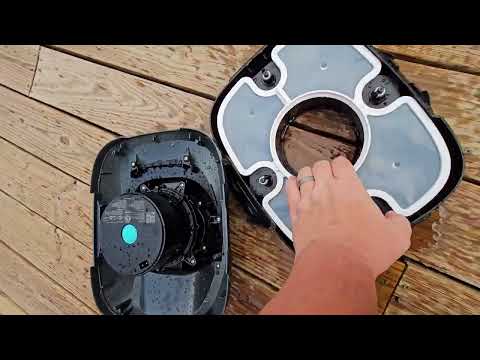
My pool was not especially dirty when I used the Scuba SE. This was not a dramatic before-and-after cleanup, and I do not want to turn it into one. After the run, though, I found small bits of debris in the collection area and debris on the filter. That matches the job I wanted it to do: pick up the ordinary smaller material on the floor as part of ongoing maintenance.
The machine’s post-run cleanup was one of its better qualities. I opened the housing easily with one hand, opened it from both sides, and removed the internal components. The filter and debris compartment could then be rinsed out. The process did not feel like exchanging one pool-cleaning chore for another complicated one. A robot is more likely to become part of a real maintenance routine when emptying and rinsing it is uncomplicated, and that was the case here.
There is a useful distinction between the components during cleanup. I rinsed the material from the white filter area down into the collection section and made sure to rinse the collection area out as well. After that, I put the components back together. The unit’s easy-opening housing and removable pieces are meaningful because they make it easier to inspect what the robot actually collected rather than guessing whether a cleaning pass did anything.
My result remains a light-debris result. I did not test heavy algae cleanup, big leaves, or a substantially dirtier pool. The package shown includes an algae-filter option, which may matter to shoppers comparing what comes in the box, but I did not use my run to judge algae-removal performance. Likewise, I did not test whether a second pass or a manual touch-up would be needed under heavier conditions. Those are sensible buyer questions, but they are outside what I experienced here.
Reassembly and charging details worth remembering
The most important reassembly detail is filter orientation. The lip on the filter component needs to face upward. If I tried to install it the other way, it would not seat all the way in. Once that lip was facing up and the part was seated properly, the remaining piece could go in either direction and the housing could be closed back up. This is not a major drawback, but it is exactly the sort of small detail that can turn a simple cleanup into a moment of unnecessary frustration if it is forgotten.
Because the charging connection is on the bottom, I also made sure the bottom charging port was dry before connecting the charger. That is a straightforward safety and care precaution after handling a pool robot. I would not rush directly from pulling the wet unit out of the water to plugging it in. Draining it briefly, rinsing the removable components, and drying that bottom port are sensible parts of the after-run routine.
These details reinforce the Scuba SE’s buyer profile. It is not the sort of product I would choose for elaborate controls or an advanced setup process. I would choose it because the workflow is easy to remember: switch it on, submerge it, let it move, retrieve it at the wall, rinse the debris-catching parts, reassemble the filter in the correct orientation, and dry the charging port before charging. That is a practical rhythm for regular above-ground pool care.
+ Pros
- Runs autonomously after it is switched on and submerged
- Parked at the sidewall for simple hook retrieval
- Housing was easy to open, including with one hand
- Filter and debris compartment were straightforward to rinse
- Collected small debris during my cleaning run
! What to know
- Install the filter component with its lip facing upward or it will not seat fully.
- Dry the bottom charging port before connecting the charger.
- My pool was not very dirty during this run, so my experience reflects routine light-debris pickup.
Who the Aiper Scuba SE makes sense for
I would consider the Scuba SE if I owned a small to medium above-ground pool and wanted a cordless robotic cleaner for routine debris pickup. It is a particularly sensible fit for someone who values simple ownership over feature depth. The key benefits I experienced were autonomous pool-floor movement after setup, wall-side retrieval with a hook, an easy-opening housing, and rinseable filter and collection components.
It also suits buyers who want to reduce manual vacuuming without expecting one compact robot to answer every pool-care need. My evidence is strongest for a lightly soiled pool and small debris. In that context, it collected material and was easy to maintain afterward. Someone shopping specifically for a solution to heavy algae, large leaves, unusually dirty water, or a complex pool floor should recognize that I did not test those conditions. I cannot say how the Scuba SE will perform there.
For my pool, the wall-parking behavior deserves extra weight in the buying decision. A robot can clean independently and still be irritating if retrieval is awkward. Here, I found it against the sidewall after the run and could pull it out with a hook. That makes this feel more usable as a repeat routine rather than a gadget I would avoid using because the finish is a hassle.
Buyer questions I could not answer from this run
I did not measure full runtime, charging time, or battery durability over repeated seasons. The up-to-90-minute figure is stated runtime information, not a timed result from my cleaning cycle. I also did not investigate replacement-filter availability. Those can matter a lot for long-term ownership, particularly for buyers who expect frequent use throughout a pool season.
I also did not test every possible floor condition or debris load. My 24-foot round pool gave me a useful real-world setting for the product’s basic operation, but it cannot answer how the robot will behave around unusual slopes, liner wrinkles, obstacles, or different pool shapes. Nor can it establish whether it will consistently cover every part of another owner’s pool. The Scuba SE changed direction at my sidewall and moved over my liner; that is the appropriate scope of my firsthand observation.
Finally, while the package shown had an algae-filter option, I did not put it through a heavy algae job. I would not buy based on an assumption that the included filter option guarantees a particular algae-cleanup result. For the ordinary debris I actually found in my filter and collection area, the Scuba SE was doing the kind of maintenance work I expected. That is the evidence I would use when deciding whether it fits my own routine.
Specs
| Spec | Detail |
|---|---|
| Product | Aiper Scuba SE Robotic Pool Vacuum |
| Intended use | Above-ground pool cleaning |
| Power control | Bottom-mounted power button |
| Charging connection | Bottom-mounted charging port |
| Cleaning movement | Front and rear flaps move the unit across the pool floor |
| End-of-cycle position | Sidewall parking |
| Stated maximum runtime | Up to 90 minutes on a full charge |
| Filter maintenance | Removable filter and collection components can be rinsed |
| Included filtration option | Algae-filter option shown with the package |
My final take for above-ground pool owners
The Aiper Scuba SE worked best for me as a simple helper for regular pool-floor maintenance. I turned it on from the bottom-mounted button, submerged it in my 24-foot round above-ground pool, and let it move on its own. It collected small debris in a lightly dirty pool, parked at the sidewall where I could retrieve it with a hook, and opened easily for filter and compartment rinsing. Those are all concrete conveniences, not abstract feature-list promises.
The trade-off is that my experience does not establish performance on the toughest jobs. I did not test large leaves, heavy algae, a major debris buildup, every pool geometry, or a complete timed battery cycle. If your need is routine upkeep and you want fewer manual passes, the Scuba SE is a practical option. If your main requirement is handling extreme cleanup conditions, I would seek evidence from use cases that match those conditions before deciding.
My maintenance reminder is simple: install the filter with its lip facing upward so it seats correctly, and dry the bottom charging port before connecting the charger. With those details in mind, the Scuba SE kept a familiar above-ground pool task uncomplicated.
Scorecard
Switch on, submerge, retrieve, and rinse.
Collected small debris in my light-debris run.
Parked at the pool sidewall for hook pickup.
Easy-opening housing and rinseable components.
Simple, but filter orientation matters during reassembly.
Frequently asked questions
Is the Aiper Scuba SE for above-ground pools?
Yes. The Scuba SE is positioned as a robotic pool vacuum for above-ground pools, and I used it in a 24-foot round above-ground pool. My observations cover its setup, movement, sidewall parking, retrieval, and cleanup in that setting.
How do you retrieve the Aiper Scuba SE?
After my cleaning run, it was parked against the sidewall. I used a hook to pull it up and held it above the water briefly before fully removing it so water could drain out. That wall-side finish was one of the most convenient parts of my experience.
Is the Aiper Scuba SE easy to clean after a run?
I found it easy to open, including with one hand. I removed the filter and collection components, rinsed the debris from them, and reassembled the unit. The main reassembly point is to keep the filter component’s lip facing upward so it seats fully.
How long does the Aiper Scuba SE run?
The stated maximum is up to 90 minutes on a full charge. I did not time a complete battery cycle, so I cannot provide a measured runtime from my pool. I did observe the robot parked at the sidewall after my run.
Does the Scuba SE remove algae?
The package shown included an algae-filter option, but I did not test the Scuba SE on heavy algae. My pool was not very dirty, and my firsthand result was small debris in the collection area and debris on the filter after the run.
As an Amazon Associate I earn from qualifying purchases.