Robotic Pool Vacuum for Algae: Is Scuba S1 Worth It?
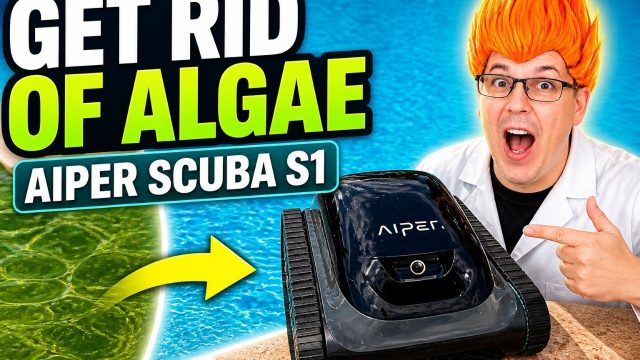
The Aiper Scuba S1 handled my irregular pool floor, crossed the drain, and pulled out fine brown debris and dog hair with its removable algae filter.
Affiliate disclosure: As an Amazon Associate I earn from qualifying purchases. This article may contain affiliate links, which means I may earn a commission at no extra cost to you.
A robotic pool vacuum for algae needs to do more than collect obvious leaves. Fine brown residue, loose dirt, sand, and pet hair are the kind of mess that can keep a pool floor looking dirty even after larger debris is gone. I ran the Aiper Scuba S1 in floor-only mode in my irregular in-ground pool, watched how it reacted to walls, an incline, and a floor drain, then opened the top basket to inspect what it caught. The removable algae-filter insert came out visibly brown and covered with dog hair and fine debris.
That filter result is the practical reason the Scuba S1 stood out to me. It is a cordless robot intended to take over repetitive pool-floor laps, but the finer insert gives it a more specific role when the problem is smaller material rather than just large debris. My experience here is focused on floor-only use, not a claim about every mode, pool surface, or pool shape.
The Aiper Scuba S1 is a solid cordless pick for pool-floor maintenance, especially if fine dirt, algae-like residue, and pet hair are part of the problem. In my floor-only run, it navigated an irregular floor, crossed the drain, and made basket cleanup simple. Just plan to rinse the fine filter and recharge it after a cycle.
As an Amazon Associate I earn from qualifying purchases.
Why this robotic pool vacuum for algae stood out
The Aiper Scuba S1 is a cordless robotic pool cleaner with four selectable modes: auto, floor-only, wall-only, and vacation. Auto splits its time between floors and walls, while floor-only keeps the cleaner focused on the bottom. For this run, I selected floor-only mode by holding the mode button until the floor setting was selected. I then dropped the cleaner into the water and watched it sink to the bottom before it began its run.
That setup is one of the appealing parts of a cordless pool robot. There was no manual vacuum hose to connect or prime for this particular cleaning job. Once it was charged and the correct mode was selected, the workflow was simply to place it in the pool and let it work through the floor area on its own. For routine maintenance, reducing that setup friction matters almost as much as the cleaning result.
The feature that matters most for algae-oriented shopping is the removable algae-filter insert inside the basket. I could use the insert when I wanted to capture finer material, including the loose algae, dirt, sand, and hair discussed during my run. If I only wanted larger debris collection, I could remove the insert from the basket assembly. That is useful flexibility because a fine filter targets the mess a coarse basket can miss, while also requiring more attention once it has done that work.
I would be careful with the word “algae” here. I found brown residue in the insert, along with dog hair and fine debris, but I did not independently identify the exact makeup of every particle in the basket. What I can say firsthand is that the insert caught visibly small material that had made the filter very dirty by the end of the cleaning cycle.
| Cleaner type | Cordless robotic pool cleaner |
|---|---|
| Best demonstrated use | Pool-floor cleaning and fine-debris pickup |
| Cleaning modes | Auto, floor-only, wall-only, vacation |
| Fine filtration | Removable algae-filter insert |
| Pool compatibility | In-ground and above-ground pools |
| Stated battery life | Up to 3 hours |
My floor-only cleaning experience in an irregular pool
My pool floor is not a simple, flat rectangle. It has a deeper section and an inclined walk-around edge. That makes it a useful environment for seeing how a floor-focused robot behaves when it reaches something other than an ordinary straight wall.
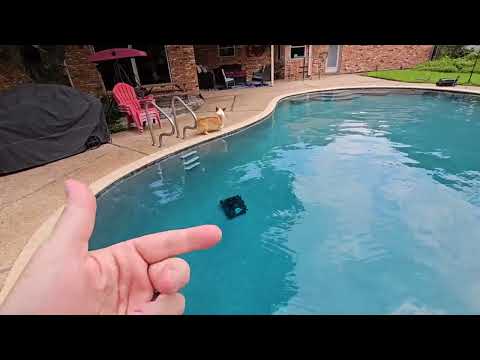
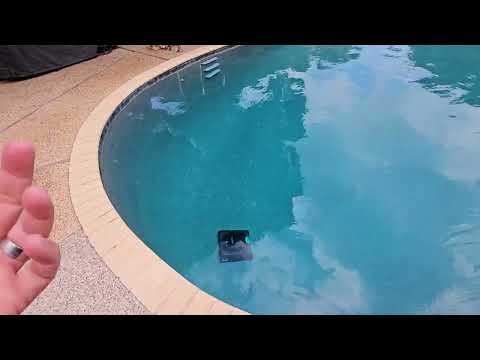
On the floor, the Scuba S1 moved under its own power with its brushes facing forward as it cleaned. When it encountered a wall, it stopped, turned itself around, and continued. I saw the same behavior at the inclined edge in the deep end. Rather than trying to travel up that incline during floor-only operation, it recognized the boundary as a wall and turned back toward the floor.
For the selected mode, that was the behavior I wanted to see. A floor-only pass should spend its effort on the pool bottom instead of repeatedly attempting a transition outside that job. The robot backed away from the edge and continued its cleaning pattern without me stepping in to reposition or redirect it.
The Scuba S1 also crossed my pool floor drain on its tractor-style tires without getting stuck. That is a small detail until a cleaner catches on a drain and needs manual help. In my run, it rolled across the drain and kept moving. Combined with its turn-around behavior at the wall and slope, that made the floor-only session feel appropriately hands-off for my pool layout.
I would not stretch this observation beyond what I saw. My run supports its handling of my irregular in-ground pool floor, its inclined edge, and its drain. It does not establish how it will navigate every drain design, surface, depth change, or unusual pool geometry. Pool layout still belongs in the buying decision, particularly if your pool has features that differ substantially from mine.
What I found in the filter basket after the run
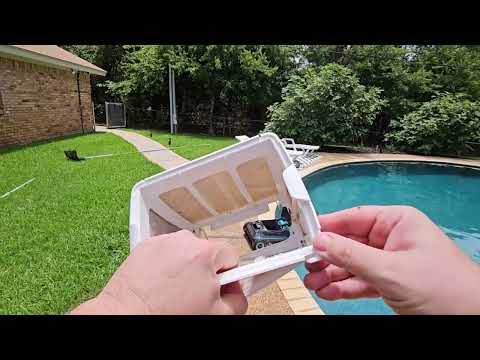
After the cleaning run, I opened the top of the Scuba S1 and removed the basket/filter assembly. Access was straightforward: the basket is reached from the top rather than through an awkward underside compartment. That matters because checking the debris is part of owning any robotic cleaner, especially one using a fine insert.
The algae-filter insert was visibly brown and covered with dog hair and fine debris. It had been clean and white beforehand, so the contrast after the run made the pickup easy to see. This was the clearest evidence from my session that the fine-filter setup was doing meaningful work beyond moving the robot around the floor.
The insert itself comes out of the basket assembly. I removed it for cleaning, and it can be reinstalled afterward. For buyers deciding whether that is a convenience or a chore, I would frame it honestly: the removable piece makes access simple, but the dirt it collects still has to be rinsed away. A finer filter is not maintenance-free; it is designed to hold onto the smaller material you want out of the pool.
I would use a strong spray to rinse the insert because mine was heavily soiled after the run. Then the insert goes back into the basket and the basket goes back into the cleaner. If the job is strictly bigger debris, the insert can be left out. If the priority is fine dirt, loose algae-like residue, sand, or hair, I would keep it installed and expect to rinse it afterward.
There is also the normal cordless-robot planning step. Once the cycle was over, the cleaner needed charging before it was ready to run again. The Scuba S1 is described as having up to three hours of battery life, but I did not time my cleaning session from start to finish. Treat that three-hour figure as stated product information rather than a measured runtime from my pool.
Choosing floor-only mode versus the other settings
Floor-only mode made sense for my run because the cleaning target was the debris on the bottom of the pool. It kept the task focused, and I could see how the robot reacted at the limits of the usable floor area. When it reached a wall or the demonstrated inclined edge, it turned and continued the floor pass.
That focus is valuable if the pool floor is the place where fine material repeatedly settles. Instead of choosing a broader routine by default, I could select the mode that matched the mess I was trying to address. For an owner who wants a robotic pool vacuum for algae-like residue on the bottom, that direct floor setting is more relevant than an all-purpose mode they may not need for every cycle.
The other selectable modes are auto, wall-only, and vacation. Auto divides its time between walls and floors. I did not run auto, wall-only, or vacation mode in this session, so I cannot offer a firsthand coverage assessment for those settings. If wall cleaning is your deciding feature, use the manufacturer’s compatibility guidance for your pool and choose based on the mode you need rather than treating my floor-only observations as wall-cleaning results.
The same distinction applies to waterline performance. My useful observations are about floor navigation, the inclined edge, the drain, basket access, and the fine filter’s contents. I would not make a purchase decision about walls or waterline cleaning solely from this particular run.
+ Pros
- Navigated the irregular pool floor autonomously and turned around at walls and inclined edges in floor-only mode
- Tractor-style tires crossed the demonstrated pool drain without getting stuck
- Top-opening basket was easy to access and remove
- Removable algae-filter insert collected visibly fine dirt and dog hair
- Fine-filter insert can be removed when larger-debris collection is all you need
! What to know
- In floor-only mode, it treated the demonstrated inclined pool edge as a wall and turned away rather than traveling up it.
- The fine algae-filter insert needs a thorough rinse after collecting dirty water and small debris.
- The unit needs charging after a cleaning cycle.
- The stated battery life is up to three hours; I did not time the cleaning session.
Who the Aiper Scuba S1 fits best
I would consider the Scuba S1 if routine pool-floor maintenance is your main objective and you want to avoid connecting hoses or manually vacuuming the floor. In my pool, it handled the repetitive navigation work across an irregular layout while I could leave it to run.
It is an especially sensible match if the mess you notice is fine sediment, hair, loose sand, or algae-like debris that settles on the bottom. The removable fine insert is the product feature that supports that use case. My basket inspection showed brown fine debris and dog hair caught in that insert, rather than just a collection of large leaves.
It is also worth considering if a floor drain has made you cautious about a robotic cleaner. Its tractor-style tires crossed my demonstrated drain without getting stuck. That is not a blanket guarantee for every pool drain, but it is a real positive from my own use.
The Scuba S1 can be used in in-ground and above-ground pools. My firsthand session was in an irregular in-ground pool, so above-ground buyers should take the stated compatibility as the relevant guidance and keep their own pool’s shape and surface in mind. The most specific recommendation I can make is for owners whose primary need is cordless floor cleaning with a removable fine-filter option.
The practical maintenance tradeoffs
The fine algae-filter insert is a strength, and it also creates a maintenance step. Mine was very dirty after the run, which is exactly what I wanted if the goal was to remove fine material from the water and floor. But it needs a thorough rinse before the next use. Buyers looking for zero cleanup after a cleaning cycle should set realistic expectations: the cleaner collects debris so that you can dispose of it.
Likewise, cordless operation trades an attached power source for simpler deployment. I like being able to select a mode, drop the self-contained unit in, and let it make its passes. The responsibility on the other end is charging it after use. If you establish a habit of rinsing the insert and recharging the robot after a cycle, it should be ready for the next floor-cleaning job.
The inclined edge in my pool is another useful buying detail. In floor-only mode, the Scuba S1 treated the incline as a wall and turned away. I see that as appropriate behavior for the mode I selected, not as a reason to expect it to climb that transition while doing a floor pass. If your priority is a different surface, select the relevant setting and verify that the cleaner and your pool geometry are a suitable match.
I also did not assess charging time, long-term durability, coverage consistency over repeated cycles, or performance across different pool surfaces. Those are separate ownership questions from the ones I answered here. What I did establish was a straightforward floor-only setup, autonomous movement on my pool floor, successful drain crossing, easy top access, and visible fine-debris collection.
Specs
| Spec | Detail |
|---|---|
| Product | Aiper Scuba S1 Robotic Pool Cleaner |
| Power format | Cordless, rechargeable |
| Selectable modes | Auto, floor-only, wall-only, vacation |
| Filter system | Top-access basket with removable algae-filter insert |
| Drive | Tractor-style tires |
| Stated runtime | Up to 3 hours |
| Pool types | In-ground and above-ground |
How I scored it for pool-floor cleaning
The strongest scores come from the parts I saw directly. Floor navigation earned a high mark because the unit worked around my irregular floor, turned at walls and the slope, and did not need my intervention in that run. Fine-debris pickup also scored highly because the removable insert came out visibly brown with dog hair and small debris.
Drain handling received the highest score based on the demonstrated crossing. Cleanup access was also a positive because opening the top and removing the basket/filter assembly was uncomplicated. Convenience is slightly lower only because cordless simplicity still comes with recharging and filter-rinsing responsibilities after the cycle.
Scorecard
Turned around reliably at walls and the inclined edge in my floor-only run.
The fine insert visibly collected brown residue, hair, and small debris.
Crossed my pool floor drain without getting stuck.
Top basket and removable insert were straightforward to remove.
Cordless operation is simple, but it needs charging and filter rinsing after use.
Frequently asked questions
Does the Aiper Scuba S1 pick up fine debris?
In my run, the removable algae-filter insert came out visibly brown and collected dog hair along with fine debris. The exact material in the brown residue was not independently identified, but the filter clearly retained small material. The insert can be removed when larger-debris collection is all that is needed.
Can the Scuba S1 cross a pool drain?
It crossed the floor drain in my pool on its tractor-style tires without getting stuck. That is a direct observation from my pool, not a promise about every drain shape or pool layout.
What happens when it reaches a wall in floor-only mode?
In my pool, it stopped at the wall or inclined edge, turned itself around, and continued cleaning the floor with its brushes facing forward. The slope was treated as a boundary in floor-only mode rather than a surface to climb.
Does the Aiper Scuba S1 work in above-ground pools?
Yes. The Scuba S1 is intended for both in-ground and above-ground pools. My own run was in an irregular in-ground pool, so my navigation observations are specific to that environment.
Does it need charging after cleaning?
Yes. After a cleaning cycle, the Scuba S1 needs to be charged before it is ready to run again. It is described as having up to three hours of battery life, but I did not measure runtime during my session.
Can I use the cleaner without the algae-filter insert?
Yes. The insert can be removed from the basket assembly if you only want larger-debris collection. I would use the insert when fine dirt, loose algae-like material, sand, or hair is the concern, then rinse it thoroughly afterward.
Final take on the Scuba S1 for fine pool debris
The Aiper Scuba S1 earned its keep in the part of pool cleaning that gets repetitive quickly: keeping the floor from becoming a collection point for fine dirt, hair, and debris. In my floor-only run, it handled the uneven layout, crossed the drain, turned back from the wall and inclined edge, and made the dirty result easy to inspect through its top-access basket.
If you want a cordless robot primarily for floor maintenance and value a removable fine filter for smaller material, this is a sensible option. Its most persuasive benefit in my use was not a vague promise of cleaner water; it was opening the basket and seeing the brown residue, dog hair, and fine debris that the insert had retained. Rinse that filter well, recharge the unit after the cycle, and let the robot take care of the repetitive floor passes.
As an Amazon Associate I earn from qualifying purchases.