Rechargeable EDC Flashlight for Garage Work: Worth It?
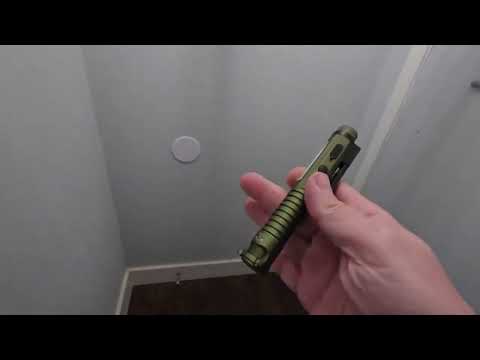
This compact PASIION flashlight packs dual magnets, a broad side work light, a red-dot pointer, colored modes, and USB-C charging into one pocketable tool.
Affiliate disclosure: As an Amazon Associate I earn from qualifying purchases. This article may contain affiliate links, which means I may earn a commission at no extra cost to you.
This rechargeable EDC flashlight is much more than a plain forward-facing light. The PASIION combines a normal flashlight beam, a broad side work light, dual magnetic mounting, a red-dot pointer, colored light modes, a bottle opener, and a glass-breaking tip in one compact package. That is a long feature list for a small pocket tool, but the features I tried did not feel like random extras. The magnets and side light in particular make a real difference for garage or vehicle work where holding a light is the annoying part of the job.
I would look at this rechargeable EDC flashlight if you work around vehicles, spend time in a garage, or want a pocket light that can attach to metal while you use both hands. The central question is not whether it has plenty of modes; it clearly does. The more useful question is whether those modes and mounting options match the jobs you actually do. For me, the answer is yes. I’m in love with this thing as a compact multi-function light, although it is not the best match for someone who only wants one button and one beam.
A seriously versatile compact light for people who will use its magnets and broad side work light. I liked the feature set a lot; just expect to spend a minute learning the timing-based side-light controls.
As an Amazon Associate I earn from qualifying purchases.
| Type | Compact rechargeable EDC / work flashlight |
|---|---|
| Charging | USB-C |
| Hands-free mounting | Magnets at clip/body area and end |
| Main lighting | Low, medium, high, and strobe |
| Side lighting | Broad white, UV-style, red, blue, and red/blue flash |
| Extra tools | Red-dot pointer, bottle opener, glass-breaking tip |
Why this rechargeable EDC flashlight works for garage jobs
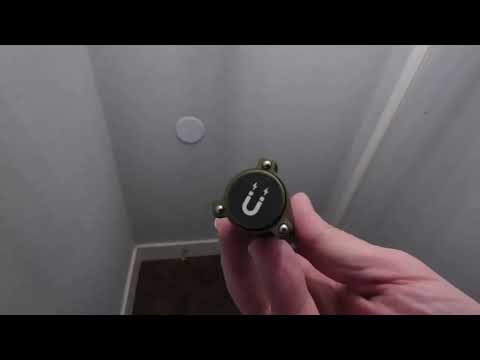
The immediate difference is the mounting setup. There is a magnet near the pocket-clip area and another at the end of the flashlight. I held the light against metal surfaces, including a car hood, and both mounting points held it in place. That may sound simple, but it changes the way a little flashlight can be used. Instead of one hand being committed to aiming a beam, the light can stay on a nearby metal surface while both hands remain available for the task.
That is the part of this design that makes the most sense for garage work. When I am trying to see under a hood, inspect an area around a vehicle, or look behind a metal shelf, a regular pocket flashlight can be bright enough but still inconvenient. I either have to keep repositioning it or hold it in an awkward place. The PASIION gives me two magnetic attachment points, so I can choose the end or the body/clip area based on the angle I need.
The movable end section adds another useful placement option. In one position it lies flat, which gives the end a more stable orientation for magnetic mounting. It is not merely a magnet attached to a tube; the end can be set up in a way that better suits placing the light against a metal surface. I would use that configuration for quick under-the-hood checks or close-up work where I need the light to stay put rather than roll around.
The pocket clip matters here, too. A compact work light only earns everyday-carry status if it is practical to bring along, and the clip gives this one a straightforward way to ride in a pocket. I see the PASIION as a light for someone who wants a tool available before a job comes up, not just a light stored with larger garage equipment. It is trying to cover the role of a pocket flashlight and a small hands-free work light at once.
Of course, magnets are most useful when there is a suitable metal surface nearby. The feature does not eliminate the need to think about placement, and I did not evaluate how the magnets hold up over long-term use. But in the metal-surface situations I tried, they were the product’s clearest practical advantage over a basic compact flashlight.
My experience with the main beam and side work light
The front flashlight controls are the simple part of this product. I used the main button to move through low, medium, and high brightness settings. Holding that button activated strobe, and another press turned it off. For a normal flashlight task, that gives me the familiar options I expect: lower output when I do not need maximum brightness, more output when I need to see farther or more clearly, and a strobe option when that kind of attention-getting mode is useful.
The retailer listing calls it an up-to-800-lumen flashlight. I did not measure output, beam distance, heat, or sustained brightness, so I treat 800 lumens as the manufacturer’s claim rather than a result I verified. I also did not compare this beam directly against another flashlight at the same stated output. What I can say from using it in a dark setting is that the product offers two distinctly different kinds of illumination: a forward beam for aiming at an area and a broad side light for lighting an area around the tool.
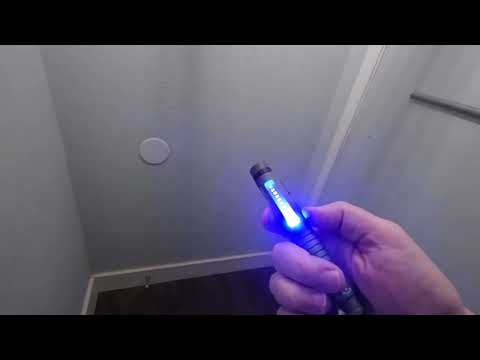
The broad white side light is the mode that gives the PASIION its work-light character. Rather than behaving like the focused front beam, it throws a wide wash of light. For a close task, that wider coverage is often more useful than a narrow hotspot. If I were looking at a group of parts, checking a section under a hood, or working near a metal surface where the flashlight is mounted, this is the setting I would reach for first.
It is worth separating those use cases before buying. A focused forward beam is for pointing light where I direct the flashlight. The side white light is for creating a broader lit workspace. This product gives me both, but neither function needs to replace the other. That is why it makes more sense as a versatile EDC or garage light than as a minimalist flashlight designed around one beam pattern.
I also cycled through the side-light options: UV or black-light-style illumination, red, blue, and a fast red-and-blue flashing mode. These are more specialized than the main white settings, but they expand what the flashlight can do without adding separate tools. Red light can be useful when a less disruptive light color is preferred in a dark setting. The UV-style and blue modes are specialty options, while the red-and-blue flashing setting is a highly visible emergency-style signal rather than something I would use casually.
The side controls do have a learning curve. Their behavior is timing-dependent: quick presses cycle through the available side-light modes, while pressing the button after the light has been left on turns the side light off. Once I understood that rhythm, the operation was manageable. At first, though, it was easy to approach the button as though every press would simply advance to the next mode. If you prioritize the most intuitive possible controls, this is the main caveat to keep in mind.
That tradeoff is reasonable to me because this light packs several side modes into a small format. Still, I would take a moment to learn the timing before relying on a particular mode. The main forward-light controls are more conventional, while the side light asks for a little more deliberate button use.
Why the red-dot pointer is useful with the flashlight beam
Near the top of the PASIION is a small separate button for its red-dot pointer. The useful detail is that I could run the pointer while the main flashlight was on. The dot appeared in the center of the forward beam, so the bright beam illuminates the general area while the red dot identifies a specific point inside it.
This is not the feature I would buy the flashlight for on its own, but it is more practical than a novelty. If I am trying to point out a wire, a component under a hood, an object on a workbench, or something farther away, a standard flashlight can show the area without making it obvious exactly what I mean. The pointer adds that precision. It is especially handy when I am communicating with someone else rather than simply looking at the object by myself.
It also makes the PASIION feel like a purpose-built multi-tool rather than a flashlight with decorative extras. The pointer has its own control, and its ability to operate alongside the main beam is the important part. I did not assess pointer range, battery effect, or long-term alignment, so I cannot speak to those details. I can say that the concurrent pointer-and-beam setup worked as demonstrated, with the dot centered in the illuminated area.
Use the pointer responsibly. I would not aim it at people, vehicles, aircraft, or reflective surfaces where it could create a distraction or hazard. For pointing at an object during a task, it is a neat and functional addition.
The pocket-tool features beyond illumination
The rear section moves between positions. In its flat position, it supports the magnetic mounting arrangement. Moved to the other end of its travel, it functions as a bottle opener. This is a small design choice, but it means the movable section has two distinct jobs rather than being an arbitrary folding piece.
There is also a pointed end intended for breaking a vehicle window or windshield in an emergency. I did not use the glass-breaking tip on an actual vehicle window, and I would not treat that feature as a casual test. For a buyer, it is best understood as an emergency-oriented capability for a vehicle or kit, not as an everyday feature. The bottle opener is much more likely to get routine use, while the glass-breaking tip is there for someone who specifically wants that kind of preparedness tool included with a light.
These additions are why the tactical-style EDC label makes sense here. This is not trying to be the smallest, simplest tube flashlight. It is a compact utility item with lighting at the center of the design. The question for a buyer is whether combining these functions is a benefit. For someone building a vehicle kit or carrying a light regularly, I think it can be. For somebody who wants the fewest moving parts and no extra functions, a simpler flashlight may be the better purchase.
+ Pros
- Dual magnetic mounting points held the light on metal surfaces for hands-free use.
- Broad side white light works differently from the focused forward beam and is useful for close-up tasks.
- Red-dot pointer can run alongside the main beam, centered in the illuminated area.
- Compact design combines a pocket clip, USB-C charging, colored/UV-style modes, bottle opener, and glass-breaking tip.
! What to know
- Side-light controls depend on timing: quick presses cycle modes, while a later press turns the side light off.
- The listing’s up-to-800-lumen figure and 11-mode count are manufacturer claims, not measurements I verified.
- Water-resistance performance, runtime, charging time, and long-term durability were not assessed.
Who gets the most value from this light?
Garage and vehicle users are the clearest audience. The broad side white light and the two magnetic mounting points give the PASIION a practical advantage when metal is available for hands-free placement. A car hood was a natural example in my use, but the same idea applies to metal shelving, tool storage, or other steel surfaces around a work area.
Everyday-carry users are another good fit. The pocket clip, USB-C charging connection, and compact multi-function design mean the tool can be carried instead of kept in a drawer. If you like having one item that covers a flashlight, a small work light, a pointer, colored modes, and a few utility features, this is the appeal.
People who want signaling or specialty light options may also appreciate it more than someone who only needs white light. In addition to low, medium, high, and strobe on the main beam, I used white, UV-style, red, blue, and fast red-and-blue flashing on the side. The product’s advertised 11-mode total remains a manufacturer claim, but the demonstrated selection is already broad enough to make this a different kind of tool from a one-mode pocket light.
Vehicle-kit builders have a reasonable case for it as well. Magnetic mounting, USB-C rechargeability, a bottle opener, and the emergency-oriented glass-breaking tip put several useful capabilities in one compact object. I would still verify any untested specification that matters for a kit, particularly water resistance, runtime, and charging behavior. Those factors may matter more than mode count if the flashlight will sit in a vehicle for long periods.
I would skip this model if I wanted zero learning curve and only needed a flashlight for occasional power-outage use. A basic light can be easier to operate and may be all that situation requires. I would also look elsewhere if a verified runtime, confirmed water-resistance rating, measured brightness, or known beam distance is a deciding factor, because I did not assess those things. This PASIION earns its place when hands-free mounting and a broad side work light are genuinely useful to you.
Important buying limits before you decide
The product has a lot of demonstrated features, but there are several things I cannot confirm from my use. I did not measure the main light’s actual output, so the listing’s up-to-800-lumen figure should be treated as a manufacturer claim. I also did not measure beam distance, runtime at any brightness level, charging time, battery capacity, heat management, or how brightness holds over an extended session.
Water performance is another open question. I described the flashlight as waterproof while handling it, but I did not conduct a water test or confirm a specific water-resistance rating. If exposure to rain, splashing, or immersion is central to your intended use, check the current product listing for a stated rating and decide based on that rating rather than my hands-on observations.
I also did not assess long-term durability. The pocket clip, the magnets, the movable end section, bottle opener, and glass-breaking tip all have practical roles, but I cannot say how they will perform after extended carrying or repeated use. None of those unknowns erase the usefulness of what I did use; they simply define the line between observed features and unverified ownership questions.
Specs
| Spec | Detail |
|---|---|
| Brand / product | PASIION EDC Flashlight Rechargeable |
| Advertised output | Up to 800 lumens (manufacturer claim) |
| Advertised mode count | 11 modes (manufacturer claim) |
| Charging connection | USB-C |
| Forward light modes demonstrated | Low, medium, high, strobe |
| Side-light modes demonstrated | White, UV-style, red, blue, fast red/blue flashing |
| Mounting | Magnetic clip/body area and magnetic end |
| Carry option | Pocket clip |
| End section | Movable flat mounting position and bottle-opener position |
| Emergency feature | Glass-breaking tip |
Scorecard
Dual magnets and a flat mounting position are genuinely practical.
Forward beam, broad work light, colored modes, UV-style mode, and strobe.
Pocket clip and compact multi-tool approach make sense for EDC.
The timing-dependent side-light control needs a short learning period.
It packs several useful functions into one small light.
Frequently asked questions about this rechargeable EDC flashlight
Is the PASIION flashlight rechargeable?
Yes. I identified a USB-C charging connection on the flashlight. USB-C is useful for a compact EDC light because it avoids requiring a separate proprietary charging cable. I did not measure recharge time, battery capacity, charging-indicator behavior, or runtime, so I cannot say how long it takes to recharge or how long it runs in each mode.
How many lighting modes did I use?
On the main forward light, I used low, medium, high, and strobe. On the side, I used broad white, UV or black-light-style illumination, red, blue, and fast red-and-blue flashing. There is also the separate red-dot pointer. The listing advertises 11 modes, but that overall total is a manufacturer claim rather than a count I independently verified.
Can it mount to a car hood?
Yes. I used the magnet near the clip/body area and the magnet at the end to hold the flashlight against metal, including a car hood. The movable end section can lie flat for magnetic placement, which is helpful when positioning the side work light or aiming the main beam at a nearby work area.
Can the red-dot pointer run with the main beam?
Yes. I ran the pointer and main flashlight together. The red dot sat centered within the forward flashlight beam, letting me illuminate a general area and point to a more specific spot at the same time.
Is the PASIION flashlight waterproof?
I did not perform a water test or verify a water-resistance rating. Although I referred to it as waterproof while handling it, I cannot confirm waterproof performance. Buyers who expect regular water exposure should check the current listing for a specific rating before buying.
Final take: a versatile light, not a basic one
The PASIION rechargeable EDC flashlight does not try to win by being a bare-bones tube with one beam. Its strength is versatility. I liked the dual magnets, the flat mounting position, the broad side work light, and the ability to use a centered red-dot pointer with the main beam. Those features combine into a tool that is more useful around a garage or vehicle than a conventional small flashlight when I need hands-free light.
The side-light controls take a little familiarization because of their timing-based behavior, but that is a manageable tradeoff for the variety of functions packed into this compact light. If you will use the magnetic mounting and work-light side regularly, it is a compelling EDC option. If your needs stop at an occasional simple flashlight, the extra controls and features may be more than you need.
As an Amazon Associate I earn from qualifying purchases.