Clip-On Earbuds for Small Ears: Do They Stay Put?
The WUYUEGE M106 clip-on earbuds felt secure in my brief wear check, paired easily, and delivered crisp sound with noticeable bass.
Affiliate disclosure: As an Amazon Associate I earn from qualifying purchases. This article may contain affiliate links, which means I may earn a commission at no extra cost to you.
If you are shopping for clip-on earbuds for small ears because normal in-ear buds gradually loosen, the WUYUEGE M106 takes a genuinely different approach to the fit problem. Instead of relying on a silicone tip to remain sealed in place, each earbud clips around the ear. In my brief hands-on check, that was the point that mattered most: once I put them on, they felt like they were going to stay put rather than pop out.
I also paired them to my phone, checked the touch controls, listened to rock music, and handled the compact charging case. My short version is that the M106 makes the most sense for someone who is tired of repeatedly readjusting conventional earbuds and wants a secure-feeling alternative for everyday movement. Sound was crisp with a good amount of bass in my listening check, and setup was straightforward.
Why these clip-on earbuds for small ears felt secure
With standard in-ear earbuds, fit is often the entire purchase decision. A bud may sound perfectly fine at a desk but become frustrating as soon as an ear gets warm or sweaty, the wearer starts moving, or the tip simply does not agree with that ear shape. When a conventional bud works loose, the usual response is to press it back in. That can interrupt music, chores, a walk, or exercise, and it is exactly the problem a clip-on design is trying to avoid.
The M106 uses a two-part shape. The smaller speaker section sits at the ear, while the larger section sits behind it. I wore them by clipping that assembly around my ear, with the speaker portion positioned down at the ear. This is not the same experience as forcing a tip into an ear canal and hoping it stays there. The physical support comes from the earbud wrapping around the ear.
My immediate impression was that they were not going to pop or fall out during typical wear. That is a strong practical result for this style. The secure feeling was not an abstract product-listing claim; it was the thing I noticed while wearing them. If your current earbuds tend to slide out when you walk around the house or when your ears get a little sweaty, this design directly addresses that annoyance.
That does not mean every buyer will have the identical fit. Ear shape is personal, and I only checked them during brief wear. I did not wear them for a full workday, compare several ear sizes, or test how the clip sits with glasses, different hairstyles, or a helmet. People considering clip-on earbuds for small ears should still treat their own comfort as an individual question. What I can say is that the retention felt notably reassuring in the time I had them on.
The design also makes sense for buyers who do not necessarily need a deep in-ear seal. A clip-on earbud is a fit-first choice: it is for someone who values a stable attachment around the ear over the familiar pressure and isolation of a typical tip. For me, the M106’s main reason to exist is that it felt anchored without needing constant attention.
What setup and pairing were like
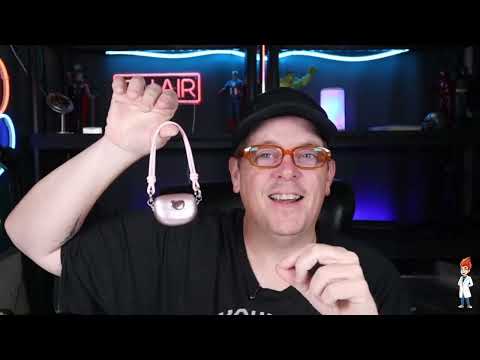
The charging case is compact and comes with an attachable handle. I thought that was a cool little design touch. It clips on, and the case can be carried like a tiny purse. The description is a little funny, but the feature is practical: a small case is easy to lose in the bottom of a bag, while a handle gives you another way to carry or attach it.
The earbuds and their case charge by USB-C, and a charging cable is included. USB-C is convenient because it is a common cable type, but I did not measure the charge rate myself. I stated that a fully depleted set can take up to about two hours to charge and that, with the earbuds and case charged, listening use is roughly four to five hours. Those are stated product-use figures, not timed results from my check, so I would not use them as a promise of the exact battery life you will get.
Pairing itself was uncomplicated. After I removed the earbuds from the case, I saw a small blue-and-red light flashing. That was the pairing indicator. On my phone, the Bluetooth device name was M106. I selected it, completed the pairing request, and heard the earbuds announce that they were connected.
This is the kind of setup experience I want from basic Bluetooth earbuds: take them out, locate the name, connect, and get on with listening. I did not need an app or any unusual setup step. For someone buying these as a straightforward daily pair, the fact that the pairing name was easy to find and the earbuds gave an audible connection confirmation removes some guesswork.
One small buyer note: I paired the set with my phone in this check. I did not test switching between devices, multipoint behavior, long-term reconnection reliability, or compatibility across a range of phones and computers. The successful M106 pairing is a useful firsthand observation, but it is not a broad compatibility test.
Touch controls handle the everyday music basics
Once paired, the M106 gives you a practical set of touch commands. A single tap on the right earbud raises volume, and a single tap on the left lowers it. Double-tapping either side plays or pauses music. A triple tap on the right earbud skips to the next track.
Those are the commands I would expect to use most often while moving around: adjust the volume without pulling out the phone, pause quickly, resume, or move past a song. Having the volume split between right and left is simple to remember after a little use. The controls are a meaningful complement to the secure fit because a stable earbud is easier to use without worrying that an adjustment will dislodge it.
The earbuds also have built-in microphones, and call-related functionality was stated. I did not make a call, so I cannot judge microphone clarity, noise handling, call-control behavior, or how a voice sounds to the person on the other end. If calls are your primary reason for buying earbuds, that remains an important unanswered question rather than a reason to choose this pair on my experience alone.
For music and basic playback, though, the demonstrated controls covered the essentials. There is no need to oversell that point: these are not an elaborate control system, but volume, play/pause, and next-track access are the commands many listeners actually reach for during ordinary use.
Sound first impression: crisp with noticeable bass
I did a brief listening check with rock music. My first impression was a crisp sound with a good amount of bass that was noticeable right away. They did not strike me as thin or weak, which can be a concern for shoppers moving away from a conventional sealed in-ear design.
This was a short practical listening impression, not a lab measurement or a head-to-head comparison against premium earbuds. I did not evaluate a broad set of music genres, test maximum volume, measure bass response, listen for distortion, or compare the M106 side by side with another pair. Still, for casual listening, I liked what I heard: the sound had clarity and bass presence rather than feeling like the tradeoff for a secure clip-on fit was weak audio.
There is an important nuance around the open-ear label. While I had the earbuds on indoors with music playing, I did not feel like I was hearing outside noises such as my air conditioner. So I would not assume that “open-ear” automatically means you will have strong awareness of every sound around you. Volume, the room, and the specific outside sound will affect that experience.
I also did not test outdoor awareness or sound leakage. If you need to hear traffic, coworkers, or announcements clearly, keep the volume at a level that lets you stay aware of your surroundings and judge that use case for yourself. My observation is limited to that indoor moment: with music playing, I was not noticing the air conditioner.
For the buyer choosing between a secure fit and a familiar in-ear format, the useful takeaway is straightforward. The M106 did not make me feel as if I had to accept flimsy sound just to get earbuds that stay on. The brief rock-music check delivered crisp sound and noticeable bass, while the clip-on structure delivered the retention I was looking for.
Who the M106 makes sense for
I would put people who regularly lose standard earbuds at the top of the list. If a silicone-tip earbud works loose during housework, walking, or general movement, it is reasonable to consider a design that physically clips around the ear. That is the M106’s clearest strength in my check.
They also make sense for shoppers looking specifically at clip-on earbuds for smaller or narrower ears. “Small ears” is not a universal fit guarantee, and I would not claim that one shape works perfectly for everyone. But the design shifts the fit discussion away from whether an ear tip stays wedged in place and toward whether the clip rests comfortably around your ear. In my brief wear test, it felt secure.
Everyday listeners are another good audience. The compact case, attachable handle, USB-C charging, simple pairing, and core playback controls form a sensible package for someone who wants music while doing ordinary tasks. The case handle is not essential, but it is a nice portability detail if you like the idea of clipping the case to something rather than burying it in a pocket or bag.
I would be more cautious if your deciding factors are verified all-day comfort, proven phone-call quality, exact battery endurance, sweat resistance, water resistance, or strenuous workout performance. I did not test those things. The product listing markets the earbuds for lightweight all-day wear and sports or daily use, but long-term comfort and hard-exercise performance remain personal, unverified questions from my hands-on check.
Likewise, do not buy these specifically because you expect maximum ambient awareness. My indoor listening observation went the other way: I was not hearing the air conditioner with music playing. That may or may not match what you want from an earbud, but it is worth knowing before you attach too much meaning to the open-ear label.
Battery and listing claims in context
Battery claims are easy to turn into a bigger promise than the evidence supports, so it helps to separate what I used from what was stated. I saw that the M106 case and earbuds use USB-C charging, and a cable is included. I did not drain them, time a recharge, or measure a listening session.
The stated information I discussed was up to about two hours to charge from empty, along with roughly four to five hours of listening use when the earbuds and case are charged. The current listing context also identifies the model as Bluetooth 6.0 and advertises up to 40 hours of total playtime. Those figures are manufacturer or listing information, not my measured results.
That distinction matters because total playtime usually depends on how the earbuds and charging case are used over multiple charges. Your volume level and usage pattern can affect the practical result. I would use the stated numbers as shopping context, then look for current listing details and buyer feedback if battery endurance is the deciding feature for you.
The same careful approach applies to the all-day and sports positioning in the listing. I found the clip-on fit secure during brief wear, which supports the basic appeal of a stable earbud for movement. It does not establish how the earbuds feel after many hours or how they perform during a demanding workout. The M106 is most convincing here as a secure-fitting everyday earbud, with the rest of those scenarios left open.
My buying advice on these clip-on earbuds
The WUYUEGE M106 is an easy product to understand once you focus on the fit. Its central value is not a long checklist of technical claims. It is the clip-on shape that felt like it would stay in place when regular earbuds are prone to loosening. Pairing worked cleanly under the M106 name, the touch controls handled the music basics, and the short listening check delivered crisp sound with a good amount of bass.
That combination is enough to make it a sensible option for someone whose present earbuds are constantly being pushed back in. The compact USB-C case and its attachable handle add useful everyday convenience without distracting from the main fit story.
Keep your expectations appropriately specific. I cannot tell you how they will feel after a full day, how they perform on calls, how long they will last per charge in your use, whether they resist sweat or water, or how they work with glasses and every ear shape. I also did not evaluate sound leakage or outdoor situational awareness. Those are not flaws I found; they are areas I did not test.
If retention is your priority, though, my brief experience points in the right direction. For buyers searching for clip-on earbuds for small ears and everyday movement, the M106 delivered the secure-feeling fit that this category is supposed to provide, without disappointing me in the quick music check.
A solid option for people whose regular earbuds pop loose. The M106 clip-on design felt secure in my brief check, paired easily, and delivered crisp sound with noticeable bass.
As an Amazon Associate I earn from qualifying purchases.
| Best for | People whose regular earbuds loosen or fall out |
|---|---|
| Fit style | Clip-on design with rear section behind the ear |
| Bluetooth name | M106 |
| Charging | USB-C; cable included |
| Controls | Touch volume, play/pause, and next track |
| Case feature | Compact case with attachable carry handle |


+ Pros
- Secure clip-on fit that felt unlikely to fall out during typical wear
- Crisp sound with noticeable bass in a brief music check
- Easy Bluetooth pairing with an audible connected confirmation
- Useful touch controls for volume, playback, and track skipping
- Compact USB-C case with an attachable carry handle
! What to know
- The earbuds are marketed as open-ear, but I did not feel like I was hearing my air conditioner while listening indoors.
- Built-in microphones are included, but I did not test call clarity.
- The current listing's 40-hour total-playtime figure is a manufacturer/listing claim, not my measured result.
- Long-term comfort will depend on your ear shape; I only checked the fit during brief wear.
Specs
| Spec | Detail |
|---|---|
| Product name | WUYUEGE M106 Clip-On Open-Ear Earbuds |
| Bluetooth pairing name | M106 |
| Charging connection | USB-C |
| Included charging accessory | USB-C charging cable |
| Controls | Touch controls for volume, playback, and next track |
| Microphones | Built-in microphones for phone calls |
| Listed wireless version | Bluetooth 6.0 (manufacturer/listing claim) |
| Listed total playtime | Up to 40 hours (manufacturer/listing claim) |
Scorecard
The clip-on design felt very secure in my brief wear check.
Paired quickly as M106 and announced its connection.
Crisp with noticeable bass during a short rock-music check.
Useful core commands are available from either earbud.
Small case and clip-on handle are practical for carrying.
As an Amazon Associate I earn from qualifying purchases.
Frequently asked questions
Do the WUYUEGE M106 clip-on earbuds fall out?
They did not feel like they were going to fall out during my brief wear check. The clip-on design wraps around the ear, and that felt more secure to me than a typical in-ear bud that relies only on a tip staying in place. Individual comfort and fit can still vary by ear shape.
How do you pair the M106 earbuds?
Take them out of the case and look for the flashing blue-and-red pairing light. In your phone’s Bluetooth device list, select “M106” and complete pairing. I heard an audible connected confirmation from the earbuds.
What touch controls do the M106 earbuds have?
One tap on the right earbud raises volume, and one tap on the left lowers it. Double-tap either earbud to play or pause music. Triple-tap the right earbud to skip to the next track.
Are the M106 earbuds good for phone calls?
They have built-in microphones and stated call functionality, but I did not test call clarity or call-control behavior. I would not choose them specifically for work-call performance based on my check alone.
Do these open-ear earbuds let in outside sound?
Not much in my brief indoor listening check. With music playing, I did not feel like I was hearing my air conditioner. I did not test outdoor awareness, so volume and surroundings should remain part of your decision.
How long do the M106 earbuds take to charge?
I stated that a fully depleted set can take up to about two hours to charge, but I did not time that process myself. Treat it as stated product information rather than a measured charge-time result.
Is the listed 40-hour playtime verified?
No. Up to 40 hours of total playtime is current manufacturer or listing context for this model, not a result I measured. I also did not conduct a battery-drain test.