Dog Joint Supplement Chews: Easy Daily Dosing?
VETIQ’s soft chews make a joint supplement easy to hand out as a reward. Dallas liked the smell and took one immediately, but joint results take time.
Affiliate disclosure: As an Amazon Associate I earn from qualifying purchases. This article may contain affiliate links, which means I may earn a commission at no extra cost to you.
VETIQ dog joint supplement chews are built around a simple idea: make the daily supplement feel like a small reward instead of something that has to disappear into dinner. That was the immediate appeal for me with Dallas. As soon as I opened the package, I could smell the chews, and Dallas came over to investigate. She tried to get into the package, sat when asked, caught the chew I offered, and ate it readily. For an older, bigger dog, that kind of easy first acceptance can make a daily routine much less complicated.
A practical pick for owners who want a soft, chicken-flavored joint supplement that can double as a training reward. Dallas was immediately interested, but introduce it gradually and do not expect instant mobility results.
As an Amazon Associate I earn from qualifying purchases.
That easy acceptance is the part I can speak to from the first use. I had only just started trying these, so I cannot say they changed Dallas’s mobility, comfort, or joints. A single chew is not a meaningful way to judge a longer-term supplement. What I can share is how the chicken-flavored soft-chew format fit into our routine, what the weight-based feeding guidance meant for a larger dog, and what I would consider before choosing this 90-count bag.
| Format | Chicken-flavored soft chews |
|---|---|
| Package size | 90 count |
| Best for | Older or larger dogs needing a reward-style supplement routine |
| Serving approach | Weight based; up to four daily at the high end of the chart Scott referenced |
| Initial dog response | Dallas immediately showed interest and readily ate one |
Why dog joint supplement chews can simplify a daily routine
These VETIQ Maximum Strength Hip & Joint chews are soft, chicken flavored, and shaped like little hearts. In my hand, they came across as a treat rather than a pill or a large biscuit. That distinction matters when the goal is not merely to give a supplement once, but to make giving it every day manageable.
Dallas is used to sitting for treats, so I did not need to invent a separate process for these. I opened the package, let her investigate the scent, asked for a sit, and offered the chew. She caught it and ate it. The product’s practical advantage for us was that it could occupy the same place in the day as a small training reward. I was not trying to convince her to eat something unfamiliar from the bottom of a bowl.
That is also the key buying question with dog joint supplement chews. Not every owner needs a supplement that resembles a training treat. But if your dog already understands a sit-and-reward routine, the format can remove friction. Instead of remembering a separate supplement task, you can attach the chew to a behavior your dog already knows. The routine is short, clear, and easy to repeat.
I would still avoid assuming that one dog’s reaction predicts another’s. Dallas was clearly interested in the smell from the open package and readily took one chew. That is a strong first response from her, not a guarantee for every dog, especially one that is selective about chicken flavor or unfamiliar soft textures. If your dog has food sensitivities or has rejected comparable treats before, review the current label carefully before buying.


What I noticed when Dallas tried the soft chews
I had Dallas in mind because she is an older, larger dog, which is the kind of dog I associate with owners considering hip-and-joint support. The chews were sent to me by the brand to try. I was careful not to make a claim that they had done anything for her before she had even begun using them. The useful first-use questions were much more basic: would she show interest, would the chew be easy to give, and would the format work naturally in a reward routine?
On those immediate usability points, the answer was yes. I could smell the chews as soon as the package was opened. Dallas picked up on that too; she came over and tried to eat from the open package. After I asked her to sit, she took the offered heart-shaped chew and ate it. That sequence made the format feel practical in a way that a product listing alone cannot convey.
The size and heart shape were part of that experience. These are small pieces intended to be handed out individually, not oversized biscuits that turn a quick reward into a whole snack break. For Dallas, the chew was easy to offer directly. If you use simple commands at home—sitting before a meal, coming when called, or waiting politely—you can connect the daily chew to one of those familiar moments.
I also like the behavioral side of that approach. The chew does not have to be tossed down without interaction. Asking for a sit creates a predictable little exchange: Dallas does the command, receives the reward, and the supplement is handled. It is not a medical outcome, and it does not make the chew more effective, but it does make the task easier for a dog that enjoys that structure.
What I did not determine was how a selective eater would respond over time, how Dallas would tolerate the chews after sustained use, or whether regular use would affect her mobility. Those are separate questions from first-day acceptance. My initial experience supports the convenience of the treat-style delivery, not a promise about long-term results.
+ Pros
- Soft treat format works naturally as a training reward.
- Dallas showed immediate interest in the scent and readily ate a chew.
- Small heart-shaped chews are easy to hand out.
- Weight-based serving guidance helps tailor the daily amount.
! What to know
- Larger dogs may be fed up to four chews daily according to the weight-based chart Scott referenced, so a 90-count bag can go quickly.
- Introduce a new chew below the maximum amount first and monitor digestive tolerance.
- Long-term mobility and comfort results were not determined in Scott’s initial use with Dallas.
Weight-based feeding changes the 90-count calculation
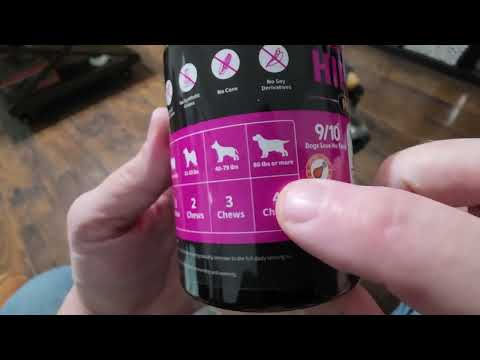
The package guidance I referenced was based on dog weight. Dallas was at the high end of the chart I looked at, where she could receive up to four chews per day. This is the point I would want larger-dog owners to notice before focusing on the “90 count” printed on the package. Ninety chews can sound like a long supply until you match it to the daily amount.
At the high-end amount of four chews per day, a 90-chew package works out to about 22 days. If your dog receives two chews a day, it works out to roughly 45 days. Those examples are simple bag math, not a serving recommendation for every dog. The correct amount remains the one on the current package for your dog’s weight. Still, doing that calculation before ordering is useful because it sets realistic expectations about how often you may need another bag.
I would not begin with the maximum simply because the chart allows it. My advice in the initial use was to start your dog a little lower and see what their gut does as they get used to the chews. A dog can be eager for a new chicken-flavored treat while still needing a gradual introduction to a new food-like supplement. Watching digestive tolerance at the beginning is a sensible part of establishing the routine.
I also recommended giving the chews at the same time each day. The value there is consistency rather than a complicated schedule. Pick a time that already has a reliable cue in your home: a morning sit, an evening routine, or another daily moment when you are likely to remember it. A product that is easy to give is only useful if the routine is easy to sustain.
Check the package you receive before following any schedule. The 90-chew figure was my estimate from the package, and current listing information identifies this as a 90-count product. Feeding directions can be updated, and dogs near a weight-range cutoff deserve extra attention to the current label. If your dog has an existing medical condition, takes medication, has a history of dietary sensitivity, or is showing pain, lameness, or a sudden mobility change, speak with your veterinarian before adding a supplement. A soft chew can be part of a daily plan; it is not a substitute for veterinary guidance.
What the formula is marketed to support—and what I can’t conclude
The current manufacturer and retailer listing markets this formula as containing glucosamine, MSM, and krill. It is marketed for hip and joint health, cartilage, joint lubrication, and muscle maintenance. Those are product-listing claims, not outcomes I independently confirmed with Dallas. I did not read the complete ingredient panel or ingredient amounts from the package I handled, so I would review the current label for complete information, including anything relevant to your dog’s diet.
It is tempting to treat a joint supplement as a quick answer when an older dog seems slower to get up or move around. I would keep that expectation grounded. I had just begun offering these chews to Dallas, and there was no basis for me to claim a change in her joints, mobility, or comfort. The immediate takeaway was much narrower: she liked the format and accepted the chew readily.
That distinction can help buyers choose more realistically. If your main concern is whether the product can be incorporated into a dependable daily reward routine, my experience was encouraging. If your main concern is whether it will produce a specific mobility outcome for your dog, I cannot answer that from an initial try. Monitor your own dog over time and involve your veterinarian when mobility concerns are present.
Specs
| Spec | Detail |
|---|---|
| Product | VETIQ Maximum Strength Hip & Joint Supplement for Dogs |
| Form | Soft, heart-shaped chews |
| Flavor | Chicken flavored |
| Count | 90 chews |
| Serving guidance | Weight based |
| Marketed ingredients | Glucosamine, MSM, and krill |
| Marketed purpose | Hip and joint, cartilage, lubrication, and muscle-maintenance support |
Who these soft chews fit best
These chews make the most sense for owners of older or larger dogs who prefer a reward-style supplement routine. Dallas is a good example of why that audience may appreciate them: she already understands a sit-for-treat interaction, and the soft chew slipped into that pattern easily. For a household that gives a dog a small daily reward anyway, there is a clear convenience case.
They may also suit owners who would rather hand out a soft chicken-flavored chew than deal with powders, tablets, or trying to disguise something in food. There is no claim here that one format is universally better than another. It is about the format your dog will willingly take and the routine you can consistently follow. Dallas’s immediate interest makes this one feel promising for dogs with similar treat motivation.
On the other hand, I would be more cautious if your dog is sensitive to diet changes, does not do well with chicken, or tends to be suspicious of new treats. Dallas’s reaction was enthusiastic, but individual acceptance is always individual. Begin below the maximum amount as advised, monitor tolerance, and use the current label rather than assuming another dog’s daily serving applies to yours.
Large-dog owners should also look closely at supply length. Up to four chews per day can move through a 90-count package quickly. That is not a defect in the chew itself; it is a practical ownership consideration. The bag may feel like a good fit if its daily reward format solves a dosing problem in your home, but it is worth calculating the likely supply before making it part of a regular routine.
My buyer takeaway on VETIQ dog joint supplement chews
My first impression of VETIQ Maximum Strength Hip & Joint Soft Chews was positive because the basic delivery system worked exactly as I hoped it would with Dallas. The chews were small, heart shaped, soft, and chicken flavored. Dallas noticed the scent right away, wanted to investigate the package, and readily caught and ate the chew after sitting. That is meaningful if your obstacle is simply getting a dog to accept a daily supplement.
The best reason to choose this product is convenience, not an expectation of instant joint results. Make it part of a command-and-reward moment, give it at a consistent time, and follow the weight-based guidance on the package. Start lower when introducing it and watch your dog’s digestive tolerance rather than rushing to the maximum daily amount.
For a bigger dog, be realistic about the count. A 90-chew bag at four per day is about 22 days, while two per day is about 45 days. That difference matters for planning. For a dog like Dallas that is happy to work for a treat, though, the reward-style format is the feature that stands out most.
Scorecard
Dallas showed immediate interest and readily took a chew.
Easy to give during a simple reward routine.
Weight-based guidance helps match the amount to dog size.
Up to four chews daily can use a 90-count bag quickly.
The soft-chew format and early acceptance were strong.
Frequently asked questions
Did Dallas like the VETIQ soft chews?
Yes. When I opened the package, Dallas immediately showed interest in the smell and tried to get at the chews. She then sat for the chew I offered, caught it, and ate it readily. That confirms a strong initial response from Dallas, although it cannot predict whether every dog will like the same flavor or texture.
How many VETIQ hip and joint chews can a dog have?
The serving guidance I referenced was weight based. Dallas was at the high end of that chart and could receive up to four chews per day. Use the current package directions for your dog’s specific weight, particularly if your dog is near a weight-range cutoff.
Should I start at the maximum daily amount?
I would not. I suggested starting at a lower amount when introducing the chews and watching how your dog’s gut responds. Once your dog has adjusted, follow the weight-based package guidance. This gradual approach is especially relevant when your dog is trying a new food-like supplement.
When should I give dog joint supplement chews?
I recommended giving them at the same time each day so the dog gets into a dependable pattern. For Dallas, a sit-and-reward routine was an easy fit. Choose a daily moment you are likely to remember and use the package guidance for the appropriate amount.
How long does a 90-count bag last for a large dog?
It depends on the weight-based daily amount. At four chews per day, 90 chews works out to about 22 days. At two chews per day, it is roughly 45 days. These are planning examples, not dosing advice; check the current package for the right serving for your dog.
Do these chews improve a dog’s mobility right away?
I would not expect an immediate answer. I had only just begun offering them to Dallas, so I cannot make a claim about mobility, comfort, or long-term joint results from my experience. The first-use observation was that she readily accepted the chew.
What are these chews marketed to contain?
The current manufacturer and retailer listing markets the formula as containing glucosamine, MSM, and krill. It also markets the product for hip and joint support. Review the current package label for the complete ingredient information and anything relevant to your dog’s dietary needs.
Final take
VETIQ Maximum Strength Hip & Joint Soft Chews get the day-to-day usability part right for Dallas. They were easy to offer, and she treated them like a reward rather than something she needed persuading to eat. The scent caught her attention as soon as I opened the package, and the small, heart-shaped soft chew worked naturally with the sit routine she already knows.
Keep the decision focused on what this first use supports. These are worth considering if you want chicken-flavored dog joint supplement chews that can fit into a consistent reward routine, especially for an older or larger dog. Introduce them gradually, use the weight chart on the package you receive, and plan for the faster bag turnover possible at higher daily amounts. I cannot claim a mobility change for Dallas after an initial trial, but I can say the format made daily administration feel easy.
As an Amazon Associate I earn from qualifying purchases.