How to Rebuild Civilization Book: Worth It as a Gift?
A hands-on look at How to Rebuild Civilization, a huge illustrated coffee-table book built for curious browsers, gift giving, and broad topic discovery.
Affiliate disclosure: As an Amazon Associate I earn from qualifying purchases. This article may contain affiliate links, which means I may earn a commission at no extra cost to you.
The How to Rebuild Civilization book is worth considering if you want a visually driven gift book for someone who likes inventions, history, odd facts, and practical ideas. I found it huge, polished, and genuinely fun to flip through. The important expectation to set is that this is not a dense textbook or a literal end-of-the-world field manual. It is a large, inviting browse book that uses the rebuilding-civilization premise to connect a surprisingly wide range of subjects.
A strong pick for curious people who like big illustrated books. It is more coffee-table conversation starter than deep survival manual, but the presentation and huge range of subjects make it an unusually easy gift.
As an Amazon Associate I earn from qualifying purchases.
Why the How to Rebuild Civilization book stands out
The first thing that hit me was the physical scale. This thing was nearly too large to get completely into my camera frame. It arrived in a sizable box, wrapped in cellophane, with a stiff, postcard-like Hungry Minds insert tucked in with it. Before I had even started turning pages, it was clear this was meant to feel substantial. It is not a small paperback that disappears on a shelf after one read.
The cover does a lot of that presentation work. It is shiny, sharp-looking, and has raised elements that I could feel. I also noticed that the pages were intentionally styled to look aged. That design choice fits the ancient-knowledge and human-discovery angle without making the volume feel worn out or gloomy. Even the book smell was pleasant. That sounds like a minor point, but it is relevant with a book designed to be handled, left out, and picked up again.
The result is a book that earns attention before the content is even considered. A gift book has to make a good immediate impression, especially for a recipient who may not know the subject matter yet. Here, the oversized shape, glossy tactile cover, and aged-looking interiors make the object itself part of the appeal. It looks like something a visitor might spot on a coffee table and ask to open.
The premise is playful: if civilization ended, how would people start rebuilding? I would not take that setup literally. Society is probably not ending tomorrow, and I would not use this one book to make serious technical, medical, or safety decisions. Still, it is an effective organizing idea. It gives the book a reason to move from fire and water to telegraphs, refrigerators, tattoos, and visual tricks without feeling like a random stack of unrelated trivia.
| Format | Large illustrated coffee-table book |
|---|---|
| Best for | Curious readers, gift shoppers, and visual browsers |
| Topic range | Practical knowledge, inventions, culture, art, and society |
| Reading style | Short, visual reference-style pages |
| Standout detail | Shiny tactile cover and aged-looking page design |
What I found inside the book
The table of contents is broad to the point of being delightfully excessive. I saw sections for medicine, plants, animals, food, materials, tools, building, mechanics, optics, electricity, sailing, aviation, industry, military, everyday life, word, art, music, human games, delicatessen, and society. That lineup is useful for buyer expectations because it makes clear that this is not solely a history book, a survival book, or an inventions book. It reaches into all of those areas.
As I flipped through it, I saw pages on making fire, finding water, edible and inedible plants, knots, and soap. Those are the obvious subjects someone may expect from a civilization-rebuilding concept. The book then branches well beyond those basics. I also saw dentistry, childbirth, C-sections, reproduction, and epidemics, along with pages dealing with refrigerators, radios, telegraphs, typewriters, modern art, tattoos, and visual tricks.
That scope is the core reason I found the book intriguing. It treats civilization as more than shelters, tools, and food. It includes communications, domestic life, technology, art, entertainment, and social life. A reader can begin with a practical question—such as how humans handle water, materials, or a household technology—then end up looking at a completely different part of the human story. It is built to encourage that kind of detour.
I especially liked that the illustrations are well done and that many pages lean heavily on visuals rather than paragraphs. Some spreads are largely there to look at. That approach gives the book a different rhythm from a conventional reference volume. You do not have to commit to a chapter-length reading session to get something from it. A few minutes with an open page can be enough to notice a detail, learn a term, or start a conversation.
There is military material and illustrated martial-arts content as well. Those pages fit the book’s broad account of human knowledge, but I would approach them as general-interest reference and visual context, not as professional instruction or training material. The same caution applies to the health-related sections. The book can introduce a subject and make it interesting; specialized and qualified resources should guide any real-world medical, technical, or safety choice.

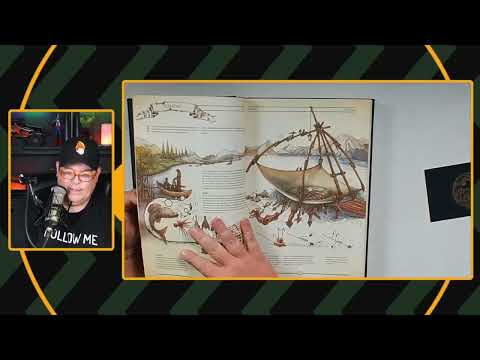
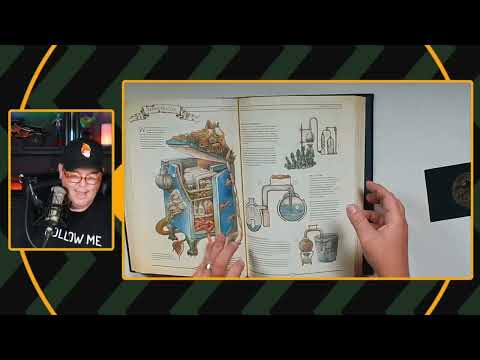
How it reads: a book made for picking up and putting down
The biggest tradeoff is simple: there is not a lot to read on a given page. For me, that was part of the appeal rather than a disappointment. It makes the book approachable when I only have a few minutes, and it gives someone visiting an easy way to browse without needing an introduction. The layout invites a person to open it anywhere and follow their curiosity.
That said, the low-text approach has a clear buyer implication. If you are looking for extended explanations, technical depth, source-heavy scholarship, or detailed step-by-step teaching on survival skills and historical technologies, this is not really the book’s lane. Its breadth is enormous, so no single entry can carry the depth of a focused book dedicated to one field.
I think of it more like a museum exhibit you can leave on the table. It gives you a subject, an illustration, and an interesting detail, then sends your brain down a rabbit hole. The value is in making learning easy to begin. It does not demand that the reader already be deeply invested in mechanics, medicine, art, or history. A person can arrive with only general curiosity and still have a good time.
The aged-page styling also helps the browse experience. It supports the feeling that you are leafing through a compendium of things people have learned over time, rather than reading a dry encyclopedia. Meanwhile, the shiny cover and polished presentation keep it from looking like a classroom handout or a survival-prepper manual. The physical design and the short visual entries are working toward the same audience: somebody who wants knowledge presented as discovery.
Where this book can be genuinely useful
I would not judge this book by whether it can replace a specialized handbook. That would miss its best use. It is useful as a curiosity engine: a book that creates entry points into subjects people might otherwise never seek out. Fire, water, plants, knots, soap, tools, optics, communications, art, and games are all possible starting points, and the book makes those starting points easy to encounter.
That makes it well suited to a living room, office, waiting area, or classroom shelf where people may have short stretches of attention. Rather than asking the reader to follow a single argument from beginning to end, it rewards random flips. I found subjects that made me want to stop and look more closely, and that is a meaningful success for an illustrated reference-style book.
For homeschool or teaching use, I can see it working as a visual prompt book. A page on a refrigerator, radio, or telegraph can lead into questions about how everyday technology works and why those inventions mattered. A page on plants, materials, or tools can become a starting point for discussing how communities meet basic needs. The arts, music, games, and society sections widen those conversations beyond a narrow technology lesson.
I would use it alongside more focused material rather than calling it a complete curriculum. The broad treatment is useful for sparking questions, comparing eras, and making a topic feel tangible. But because the book touches substantial topics—including health, reproduction, epidemics, and practical skills—it makes sense to use current, qualified, topic-specific resources when accuracy or real-world action matters.
+ Pros
- Oversized, polished physical presentation with a shiny tactile cover
- Wide-ranging illustrated topics encourage casual discovery
- Visual, low-text layouts are easy to browse
- Distinctive gift appeal for curious readers
! What to know
- This is a coffee-table-style browse book, not a dense technical manual.
- The civilization-collapse premise is partly tongue-in-cheek.
- Use specialized, qualified resources for real medical, safety, or technical decisions.
Who should buy the How to Rebuild Civilization book?
Buy it for the curious person. This is a natural fit for somebody who enjoys history channels, likes learning how ordinary things work, or always has a random fact ready at dinner. The book does not lock itself into one narrow subject. It can meet an interest in inventions one day, art another day, and the history of everyday life the next.
It also makes sense for gift shoppers looking for something for a hard-to-buy-for recipient. The scale and cover treatment make it feel more distinctive than a standard book, while the variety means you do not need to know whether the recipient is exclusively into aviation, gardening, mechanics, or art. There is enough range that a broadly curious reader is likely to find several sections that pull them in.
Readers who prefer illustrations over blocks of prose are another strong fit. If a traditional encyclopedia feels like homework, this is much friendlier. The visual pages make it easy to browse and easy to share. A person can point to a spread, ask a question, and move on without feeling as though they have abandoned a long chapter halfway through.
The book may also appeal to someone building a collection of display-worthy reference books. Its big format, tactile details, and aged-looking design are not incidental. They help it function as an object people will want to leave visible. That matters more here than it would for a purely utilitarian manual stored on a shelf.
Skip it if you need a serious instructional manual. The “rebuild civilization” title is a fun hook, not a promise that the book replaces specialist resources on medicine, engineering, food production, or survival. Readers who want sustained prose, exhaustive research, or detailed procedural instruction will likely want a more narrowly focused title.
It may also be a mismatch for somebody who dislikes broad, eclectic books. The same variety that makes it a good browsing experience can feel scattered if you want a single subject developed in depth. Before buying, it helps to ask whether the intended reader would rather have one big visual compendium or a focused book devoted to a specific skill, period, or technology.
Specs
| Spec | Detail |
|---|---|
| Product | How to Rebuild Civilization: The Ultimate Guide to Rebuilding a Civilization |
| Primary ASIN | B0CJCKGRW1 |
| Book style | Large-format illustrated reference and coffee-table book |
| Cover treatment | Shiny cover with tactile raised/embossed-feeling elements |
| Page design | Intentionally aged-looking styling |
| Content organization | Multi-section guide spanning practical, technical, cultural, and social subjects |
Is it useful, or mostly a novelty?
I would not call it a throwaway novelty. The polished presentation is certainly part of the draw, but the content has real curiosity value because it reaches across so many pieces of human life. The book can make a reader pause over a practical subject, an invention, a communication tool, a piece of art, or an unusual visual trick. That is more lasting than a gift that provides one quick joke and then goes in a drawer.
Its usefulness is not about being the final authority on every page. It cannot be: the subject range is too large. Instead, it is useful because it lowers the barrier to exploring a topic. It is easy to start, easy to revisit, and easy to share with another person. The moment someone says, “Wait, how does that work?” the book has done what this format does best.
The tongue-in-cheek civilization-collapse setup helps keep all of that material from feeling academic or dry. It creates a loose narrative frame for serious human knowledge without requiring the reader to take the scenario literally. I found that contrast effective: an imaginative premise, a handsome physical volume, and a wide selection of subjects that can lead to further reading elsewhere.
Scorecard
Large, polished, tactile, and gift-worthy.
Strong illustrations and short page-level reading.
Covers an unusually broad mix of subjects.
Built for discovery, not specialist-level detail.
Distinctive enough for hard-to-buy-for readers.
Final recommendation
I would choose the How to Rebuild Civilization book for a curious adult, a visually minded teen, a history-and-inventions fan, or someone who is genuinely difficult to shop for. It looks premium, feels substantial in the hands, and has enough unusual subject matter to reward repeated random flips through the pages.
It is particularly appealing if the recipient likes books they can display, share, and return to in short bursts. The illustrations and limited page-level text mean it works when someone has five minutes just as well as when they want to wander through several sections. Its content range also gives it social value: it is the kind of book that can turn into a conversation when another person sees it sitting out.
Just buy it for what it is: an attractive illustrated conversation piece with a lot of learning packed into it, not a replacement for deep technical books or real-world training. For that coffee-table-book mission, I think it delivers. It takes the sprawling story of human know-how and makes it approachable enough that people may actually open it.
As an Amazon Associate I earn from qualifying purchases.
Frequently asked questions
Is How to Rebuild Civilization a survival guide?
Not in the strict field-manual sense. I saw topics such as fire, water, plants, knots, and soap, but the book works primarily as a broad illustrated browse book. Its premise gives it a survival-oriented frame, while the actual contents range much more widely into technology, culture, art, and society.
Is the book text-heavy?
No. I found that many pages are visual and that there generally is not a lot of text on each page. That makes it easy to browse casually and share with other people, though it is less suited to a reader seeking long-form depth on each subject.
What topics does the book cover?
The contents span practical subjects and culture, including medicine, plants, animals, food, materials, tools, building, mechanics, optics, electricity, sailing, aviation, industry, military topics, everyday life, word, art, music, games, delicatessen, and society. The pages I viewed also included everyday technologies such as refrigerators, radios, telegraphs, and typewriters.
Would this make a good gift?
Yes. Its oversized, polished physical presentation and unusually broad mix of topics make it a strong gift for a curious person or someone who already seems to own everything. The shiny tactile cover and display-friendly format add to that gift appeal.
Is it useful for homeschooling?
It can be useful for visual prompts and broad discussions about inventions, history, art, society, and everyday technology. I would use it alongside more focused resources rather than as a complete curriculum, especially for technical, medical, or safety-related subjects.
Does it cover more than ancient technology?
Yes. Although the civilization-rebuilding concept suggests basic tools and survival knowledge, I also saw material related to communications, household technologies, modern art, tattoos, visual tricks, games, and society. Its scope is much broader than a single era or one kind of invention.