Ryobi 18V ONE+ Cordless High Pressure Inflator Review
I aired up a low tire with the Ryobi 18V ONE+ high pressure inflator in seconds. Here's how it works and the one trigger trick you need.

Reviewed by
Scott Ayres
Welcome to the Product Demo lab where I (Scott) demo products so you can make an educated buying decision. I keep it real, honest and laid back.
This post contains affiliate links. As an Amazon Associate, we earn from qualifying purchases at no extra cost to you.
Quick Verdict
My tire was sitting in the red, I pulled the trigger, and it climbed to 29 PSI before I finished talking. The Ryobi 18V ONE+ high pressure inflator is a one-handed, grab-and-go fix, as long as you already own the 18V battery, because this is the body-only version.
Buy if you:
- Already own Ryobi 18V ONE+ batteries and want to skip a corded pump
- Keep catching a slow-leak tire that needs a quick top-off in the driveway
- Want one-handed operation you can run right at the valve stem
- Need something compact enough to toss in a trunk or garage shelf
Skip if you:
- Expect a set-it-and-walk-away gauge, you have to keep letting off the trigger to read pressure
- Don’t own any 18V ONE+ batteries, none is included in the box
- Want a giant shop compressor for filling big truck tires all day
Clicking takes you to the seller's website. We may earn a small commission if you purchase, at no extra cost to you.
| Air flow | 16 liters per minute |
|---|---|
| Max pressure | 10.3 bar (~150 PSI) |
| Voltage | 18V (Lithium-ion, battery not included) |
| Hose length | 50 cm |
| Weight | 600 g (body only) |
| Color | Gray |
High Pressure Tires: What Happened Before I Pulled
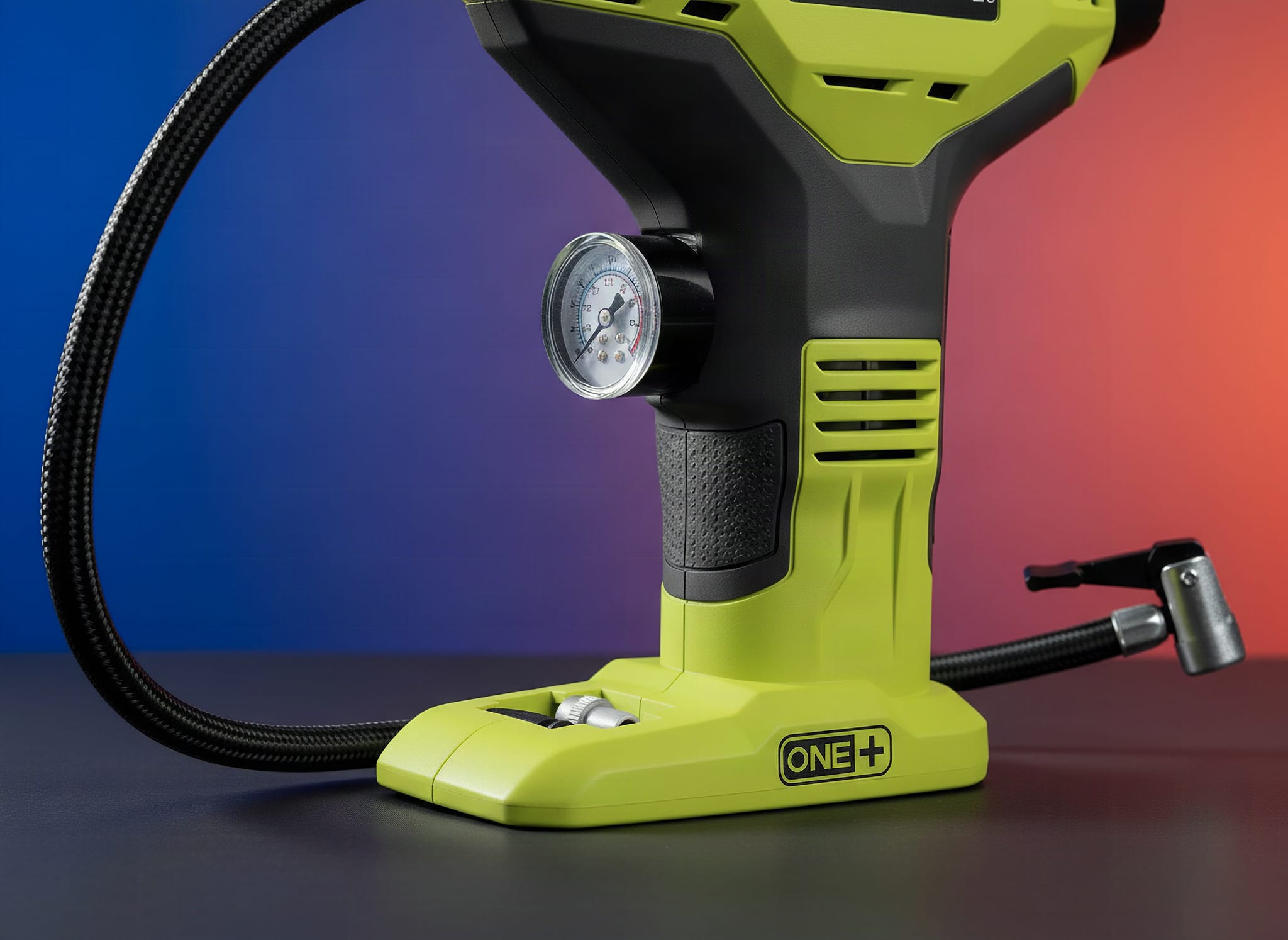
My tire was sitting a little low, and the gauge was already glowing red the second I hooked up the Ryobi 18V ONE+ high pressure inflator. I had it clipped onto the valve stem, pulled the trigger, and away it went. If you want to see it run, the Ryobi 18V ONE+ high pressure inflator is the little gray body-only unit I’m using in the video. No cord, no wall outlet, just a battery and a trigger.
That’s the whole appeal: no outlet within reach, no cord to uncoil, no trip to the gas station. You grab it off the shelf, walk to the wheel, and the problem is gone in under two minutes.
What’s Under the Trigger
It’s an 18V cordless inflator that pushes 16 liters of air per minute and tops out at 10.3 bar, which is roughly 150 PSI. That high pressure ceiling is why it handles car tires and not just pool toys. The quick connect coupler on the 50 cm hose snaps onto the valve fast, and the whole body only weighs 600 grams, so it’s easy to hold at the wheel with one hand.
The one thing to know before you order: this is the body-only version. No 18V ONE+ battery in the box. If you’re already in the Ryobi ecosystem, that’s a non-issue. If you’re not, budget for a battery too.
Red to 29 PSI Fast
It aired the tire up quick. My gauge was red, I held the trigger, heard the motor kick, and when I let off I was already reading 29 PSI. Heat, heat, boom, and it was climbing. For a body that weighs 600 grams, it moves air faster than I expected out of something this small.
The one-handed operation is the part that sells it. You clip on, squeeze, and watch the number climb, no free hand needed to steady a hose or hold a cord out of the way. The only thing between you and driving away is the stop-and-check gauge rhythm, which I’ll get to next.
You Have to Let Off the Trigger to Read It
Here’s the catch: the gauge only reads true when you let off the trigger. While you’re inflating, the number isn’t your real pressure. You’ve got to release, glance at the display, then squeeze again. That’s how I caught it at 29.
And you want to let off really quick, because it’ll lose a little air otherwise when you pop the coupler. So there’s a rhythm to it. Squeeze, check, squeeze, check, then disconnect fast. It’s not a walk-away tool. You have to babysit the last few PSI so you don’t overshoot or bleed it back down. Minor, but worth knowing before you’re crouched in a parking lot wondering why the number keeps bouncing.
Get it now
Ryobi 18V ONE+ High Pressure Inflator
Get the best price on Amazon →This post contains affiliate links. As an Amazon Associate, we earn from qualifying purchases at no extra cost to you.

Who Grabs This Off the Shelf
Already own Ryobi 18V ONE+ batteries? You’re essentially getting a cordless inflator at body-only pricing, no ecosystem tax, no redundant charger sitting in a box. The person this is built for is the one topping off a slow-leak tire every Sunday morning: this lives in the trunk, stays charged off the same battery as the drill, and turns a tedious errand into a 90-second driveway job.
It’s also handy for anyone who bikes, camps, or keeps a trailer with tires that sit half the year and go soft. The high pressure rating means it’s not limited to low-pressure stuff. Car tires, bike tires, whatever needs air, it’ll push to the number you set.
Cordless Inflator vs. the Old Corded Pump
Cordless beats corded for reach and one-handed use; corded wins on battery limits and long fill times. A cheap corded pump plugs into your cigarette lighter and runs as long as the car’s on, which is nice for a long inflation on a big tire. But you’re tethered to the outlet and the cord never reaches all four wheels comfortably.
This Ryobi flips that. No cord, walk to any tire, one-handed. The limit is your battery charge instead of a power cable. If you’re already living in the 18V ONE+ world, the cordless freedom wins easily. If you don’t own a single Ryobi battery yet, a corded pump is cheaper out the gate.
My Advice Before You Order
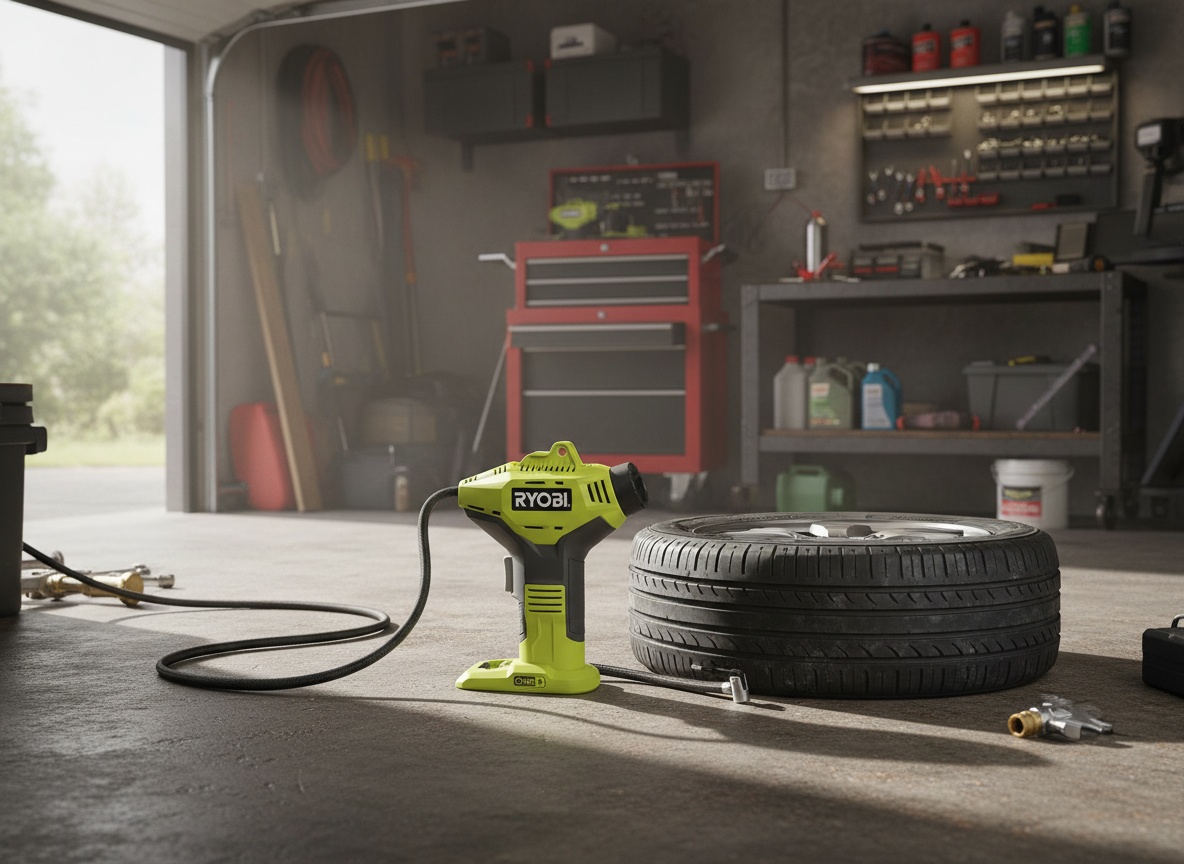
Double-check that it says body only before you check out, and confirm you’ve got a charged 18V ONE+ battery ready. Nothing worse than getting a tool in the mail with no way to power it. Learn the let-off-the-trigger rhythm early so you don’t overshoot your target PSI, and pop the coupler off fast when you hit your number so you don’t lose air. That’s the whole learning curve, and it takes about one tire to figure out.
Pros
- Aired a red, low tire up to 29 PSI quickly with one hand
- Fully cordless, no outlet or cigarette-lighter cord to wrestle
- Compact 600 g body that’s easy to hold right at the valve stem
- High pressure ceiling (10.3 bar) handles car tires, not just toys
- Quick connect coupler snaps onto the valve fast
Cons
- Gauge only reads true when you let off the trigger, so you’re constantly stop-checking
- Loses a little air if you don’t pop the coupler off fast
- Body only, no battery included in the box
Frequently Asked Questions
Does it come with a battery?
No, this is the body-only version, so no 18V ONE+ battery is included. You’ll need to already own a Ryobi 18V lithium-ion battery or buy one separately to run it.
Which Ryobi batteries work with it?
Any Ryobi 18V ONE+ lithium-ion battery works, since it’s part of that platform. If you already have Ryobi 18V drills or other tools, those same batteries slot right in.
Can it inflate a fully flat car tire?
It’s rated to 10.3 bar (~150 PSI), so it has the pressure ceiling for car tires. A fully flat tire takes longer and more battery than a quick top-off, so keep a charged pack handy for bigger jobs.
Why does the pressure reading keep changing?
The gauge only shows accurate pressure when you let off the trigger. While air is flowing the number isn’t your true reading, so release the trigger, check the display, then squeeze again.
Does it lose air when I disconnect?
A little, if you’re slow about it. Pop the quick connect coupler off the valve fast when you hit your target PSI to keep from bleeding air back out.
Can I use it for bike tires and inflatables too?
Yes, it handles bikes and other inflatable items, not just car tires. The high pressure rating means it isn’t limited to low-pressure stuff, though you’ll dial the target down for delicate items.
How heavy is it to carry around?
The body weighs about 600 grams, so it’s light enough to hold at the wheel one-handed. Add the battery weight and it’s still easy to toss in a trunk or on a garage shelf.
Is there a warranty or spare parts support?
Ryobi lists a 5-year spare-part availability duration for this inflator, which helps for long-term repairs. Check the current listing for the exact warranty terms in your region before buying.
Get it now
Ryobi 18V ONE+ High Pressure Inflator
Get the best price on Amazon →This post contains affiliate links. As an Amazon Associate, we earn from qualifying purchases at no extra cost to you.
🛍️ Shop everything in this video
Every product mentioned, in one place — these are affiliate links, so I may earn a small commission at no extra cost to you.
🛍️ Ryobi Cordless Tire Inflator — check price on Amazon →
About the reviewer
Scott Ayres
Welcome to the Product Demo lab where I (Scott) demo products so you can make an educated buying decision. I keep it real, honest and laid back.