Mini Magnetic Tiles for Travel: Are They Worth It?
This compact Mini Magnetic Tile Travel System turns its metal storage tin into a magnetic building surface. I found the tiles quick to connect, solid in small builds, and genuinely satisfying to pack away.
Affiliate disclosure: As an Amazon Associate I earn from qualifying purchases. This article may contain affiliate links, which means I may earn a commission at no extra cost to you.
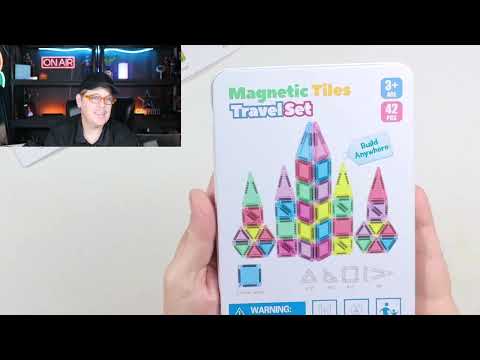
The Mini Magnetic Tile Travel System gets the important part right: the case is part of the toy. I liked the small metal tin immediately because its attached lid becomes a magnetic building surface instead of becoming one more loose piece to manage. For mini magnetic tiles for travel, that is a practical design choice, not just cute packaging. Open the tin, use the lid as a compact place to build, then work the tiles back into the fitted storage layout when play is over.
I tried the set after the brand sent it to me, and my experience was centered on the pieces, the magnetic connections, the guide cards, and the storage system. The tiles connected quickly in my hands, and I could feel them pull toward each other as I brought them together. I also built a small upright structure that stayed together when I picked it up. This is not a replacement for a big standard-size tile collection, but that is not what this compact kit is trying to be.
A smart compact magnetic-tile set for kids, travelers, and anyone who likes guided tactile building. The attached-lid tin is the standout: it stores the pieces and gives you a magnetic place to build.
As an Amazon Associate I earn from qualifying purchases.
| Format | Mini magnetic tiles in a metal storage tin |
|---|---|
| Build surface | Attached magnetic tin lid |
| Guided play | Visual cards for designs, letters, and numbers |
| Storage | Fitted insert; tiles stack two thick |
| Set size | 42-piece set |
My hands-on take: small set, useful setup
The set arrived in a little metal tin. When I opened it, the lid stayed attached, which I genuinely liked. That sounds like a small detail, but it changes the first moment of play. Rather than setting a loose lid aside or searching for a separate play board, I had a ready magnetic surface in front of me. The tiles attached to that metal surface as well as to each other.
This is the difference between a travel toy that can feel scattered and one that starts contained. You have the pieces, a defined place to build, and a place to put everything back when you are done. On a small table or any limited play area, that arrangement is useful because the tin creates a natural boundary around the activity.
The tiles are small plastic pieces with magnets inside, and there are different shapes to work with. When I began connecting them, they latched together quickly. I could actually feel the magnets drawing the pieces into position as they got close. That immediate pull made the set easy to start using; I was not spending time trying to line up complicated connectors or force pieces together.
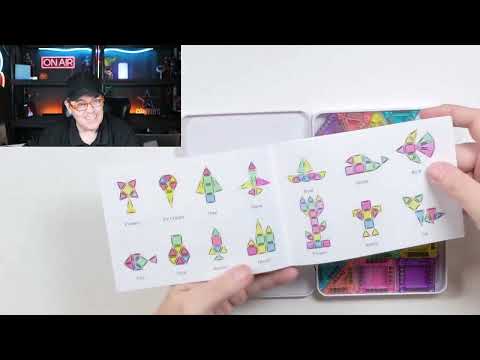
I also liked the included visual build-guide cards. They include example designs along with letters and numbers. I am not naturally the person who looks at a pile of shapes and instantly sees a finished creation, so a card is a useful entry point. It gives me a clear first task, whether that is making a robot, a letter, or a number, without preventing me from changing direction once I get started.
That balance matters in a compact activity. Completely open-ended building can be great, but a short trip, a wait, or a small break is not always the time when someone wants to invent a whole project from scratch. The cards provide a prompt, while the tiles still leave room to make something different. My own build is a good example: I started with the idea of a tree and ended up with something that looked much more like a castle or a rocket ship.
Do these mini magnetic tiles hold together?
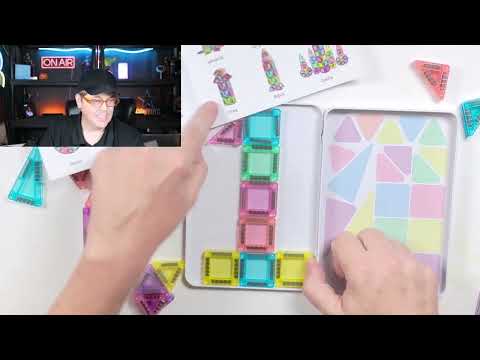
Yes, for the small builds I made, they did. I first recreated the number one from one of the guide cards using several tiles. It stayed in place on the tin lid, which gave me a simple, flat example of how the pieces work with the built-in metal surface.
Then I started building upward. I made a square, adjusted a piece that I decided I did not need, and continued adding levels. The magnets made that experimentation feel straightforward: I could add something, remove it, tighten up the arrangement, and keep building. I got to four tiers, added more pieces at the top, and the build held itself together.
My original plan was a tree. The result was closer to a little castle, with some rocket-ship energy mixed in. More important than the name was the result: I picked up the completed castle-like structure, and it remained solid in my hand. That was the most useful real-world indication I got of the connection strength in a compact build.
The mini format still sets the scale of the experience. These are small tiles in a small tin, so the set naturally favors letters, numbers, flat patterns, short upright creations, and shape experiments over giant bridges or sprawling tile cities. I would not buy it expecting the kind of large-scale construction a bigger set supports. I would buy it for quick magnetic building where the compact format is an advantage.
For the kind of project I made, the connection felt fast and secure. The tiles did not feel fussy to place, and the fact that I could lift my finished structure without it coming apart made the set more satisfying than a purely flat travel activity. You can start with a guide, build vertically, revise your idea as you go, and see a small creation take shape without needing a large work area.
Why the tin matters for travel play
A lot of small building toys solve one problem and create another: now you have a bag full of little parts. Here, the metal tin does more work. The lid gives the tiles a magnetic landing zone while I built, and the bottom has a fitted insert that organizes the pieces for storage. Those two functions are what make the system feel purpose-built for portable use rather than simply a mini version of a larger toy.
The attached lid is especially helpful because it remains with the tin when opened. There is no separate board to pack and no separate lid to set somewhere else while you are building. For a parent putting together activities for a plane, car, restaurant, waiting room, or other small-space situation, fewer separate components is a meaningful convenience.
I did not use the set during an actual flight or car ride, so I cannot say how it handles every travel situation or whether every piece stays secure if the tin is jostled in transit. What I can say is that the compact metal case, attached build surface, and organized insert are exactly the features I would look for in a packable construction activity. They address the setup and cleanup parts of travel play, not just the building itself.
The tin also makes the surface feel intentional. The tiles can stick to the lid, so it gives a flat design or an early build a defined home while you work. That may be more useful than trying to build directly on a tray table or another surface where small pieces can spread out. It is still a small workspace, but it is one that belongs to the set.
Portability is therefore the product’s main tradeoff and its main appeal. The limited footprint means limited build scale. In return, the toy does not ask you to bring a separate building board, a bulky storage tub, or a loose bag of components. If the goal is a contained activity rather than maximum construction capacity, that is a sensible exchange.
Guide cards make mini magnetic tiles easier to start
The guide cards are more valuable here than they might be in a large, open-ended tile bin. With a compact set, a specific idea helps you get moving quickly. I used a card to recreate the number one, and the cards also include letters, numbers, and example designs such as a robot. That creates several ways to approach the same pieces.
A child can be given a simple prompt such as recreating a number or letter. Someone who wants a more visual task can start with one of the design examples. Or you can treat the card as a suggestion and build freely after the first few pieces are in place. I did exactly that when my planned tree became a different structure.
This is why I would not describe the cards as restrictive instructions. They are useful prompts for people who want them. The set still supports improvising, changing a design, and trying to build upward. That is a good fit for a tactile magnetic toy: there is enough direction to avoid the blank-page feeling, but enough flexibility to make the activity your own.
The guides also complement the small tile size. Because the kit is designed around compact builds, a quick letter, number, or recognizable shape can feel like a complete project. You do not need to create a huge structure for the play session to have a beginning and an end. That is a practical advantage when time and space are limited.
Storage is part of the activity
The fitted tray inside the tin deserves some credit. It helps organize the tiles, but it also makes cleanup more intentional than dumping pieces into a box. To get everything back inside, I needed to line them up in the fitted layout and stack them two tiles thick. The pieces need to go back in that intended arrangement for the tin to close.
That requirement is worth knowing before you buy. Cleanup is not a quick dump-and-go situation. It takes a little attention, and someone expecting a totally effortless pack-away may find the placement rules more involved than simply tossing parts into a bag.
For me, though, that was also part of the appeal. The storage process becomes a small matching exercise: find the shape that belongs in an opening, decide where a piece fits, and add the second layer. You can work broadly by shape, or make it more particular by matching colors as well. I found that tactile sorting engaging even at 51, because it adds hand-eye coordination and simple problem-solving after the building is finished.
That makes the set potentially appealing beyond a child who wants an open-ended construction toy. An older adult or anyone who enjoys hands-on sorting may appreciate the same parts for a different reason. The activity is not just about making a structure; it also includes taking it apart, recognizing shapes, and returning the pieces to an organized layout.
Compact storage does come with compact-storage rules. I see that as a buyer caveat rather than a product flaw, because the fitted insert is what helps the small tin hold the tiles neatly. Just expect the final step of play to be a brief puzzle of its own.
Who should buy mini magnetic tiles for travel?
This set makes the most sense for a few specific people:
- Parents who want a compact activity: The tin keeps the setup contained, while the guide cards offer an immediate prompt when a child does not know what to build.
- Families packing for travel: The attached lid doubles as a build surface, which is more useful than carrying loose mini tiles alone.
- Kids who like letters, numbers, and simple challenges: The cards offer recognizable tasks in addition to open-ended building.
- Adults and older adults who enjoy tactile puzzles: Building and returning the shapes to the fitted tray creates a small hands-on sorting activity without a huge footprint.
- Magnetic-toy fans who want a smaller format: The fast connections and ability to make short upright builds are still present in this more compact system.
If your goal is giant structures, long bridges, or a large supply of tiles for several elaborate projects, I would choose a larger standard-size set instead. This product is built around portability and contained play. That is its strength, and it is also the boundary that should guide the purchase decision.
What I liked most
The attached lid is the headline feature. It stayed connected to the tin when I opened it, and it gave me a magnetic surface right away. No separate board and no loose lid rolling off the table. I could simply open the case and start building.
The magnets also made the experience feel quick. I could form a square, build upward, change my mind, remove a piece, and keep going without fighting the toy. My tree may have become a castle, but the tiles made that kind of improvising easy. I could feel the pieces pull into position, which made the magnetic action itself part of the fun.
The guide cards are another smart inclusion. Open-ended toys are great, but sometimes a pile of shapes needs a starting idea. A robot, a number, or a letter gives the session momentum. From there, you can follow the design, alter it, or move into a completely different build.
Finally, I like that the fitted insert gives the case a real purpose. It is storage, but it also extends the tactile side of the toy. The set feels complete from opening the tin to putting the final stacked pieces away.
+ Pros
- Compact metal tin provides both storage and a contained place to play.
- Attached lid works as a magnetic building surface.
- Tiles connected quickly and pulled into place easily in my hands.
- My multi-tier castle-like build remained together when I picked it up.
- Guide cards offer designs, letters, and numbers for easy build prompts.
- Fitted storage insert turns cleanup into a shape-matching activity.
! What to know
- The tiles must be arranged in the fitted storage layout and stacked two thick for the tin to close.
- The miniature format is best for small builds; it is not meant to replace a larger magnetic-tile collection.
- The included guides are useful when you want a prompt, but you can also build freely.
Specs
| Spec | Detail |
|---|---|
| Product | Mini Magnetic Tile Travel System |
| Piece count | 42 pieces |
| Tile material | Plastic tiles with internal magnets |
| Case type | Small metal tin with attached lid |
| Magnetic surfaces | Tiles connect to each other and to the tin lid |
| Included accessories | Visual build-guide cards and fitted storage insert |
Scorecard
Compact tin combines storage and a build area.
Tiles connected quickly and held my lifted build together.
Cards give useful ideas for designs, letters, and numbers.
Fitted tray is organized, though pieces must be placed carefully.
Good for compact creations, not large tile projects.
Mini Magnetic Tile Travel System FAQ
Can the tiles stick to the case?
Yes. I used the attached metal lid as a magnetic building surface, and the tiles attached to it as well as to one another. That is one of the key reasons the tin feels useful rather than merely decorative storage.
Are there build ideas included?
Yes. The set includes visual guide cards with example designs, letters, and numbers. I used one to recreate the number one, and the cards also provide ideas such as a robot for someone who wants a starting point.
Can these tiles make upright structures?
They can. I built a multi-tier structure that stayed together when I lifted it. The compact size still limits how large or elaborate a build can become, so I would think of it as a small-build set rather than a substitute for a larger magnetic-tile collection.
Is cleanup easy?
The fitted insert organizes the tiles, but they need to be arranged in the intended layout and stacked two thick to fit inside the tin. It takes more care than dumping pieces into a container, although that arrangement also creates a shape-matching activity.
Is this set suitable for actual plane or car travel?
The compact tin, attached build surface, and contained storage format make it a logical option for travel play. I did not use it on an actual flight or car ride, so I cannot speak to performance in every on-the-go situation or how the case handles being jostled during transport.
What age is the Mini Magnetic Tile Travel System for?
I did not establish a recommended age or safety guidance during my hands-on use. Check the product packaging and seller information before buying, especially when considering the set for a younger child.
Final recommendation
I would recommend this Mini Magnetic Tile Travel System if you want magnetic construction play in a compact, self-contained format. The tiles connected fast for me, my small upright build stayed solid when I picked it up, and the attached metal lid gave the set a genuinely useful place to build.
It is not the set for massive creations. It is the set for a quick build on a small surface, a guided letter or number challenge, and a tidy tin that earns its space in a bag. The fitted storage arrangement requires a little care, but that same process adds another tactile sorting task to the experience.
For kids, travelers, older adults, and anyone who prefers a small magnetic activity with a clear place to start and finish, it is a clever little system. The feature that sells it for me is not simply that the tiles are mini; it is that the tin turns those mini tiles into a contained building setup.
As an Amazon Associate I earn from qualifying purchases.