Covered Bait Rat Trap: Easy Snap Setup?
This covered bait rat trap has a recessed food compartment, a click-to-set mechanism, and a reusable snap design that I found straightforward to operate.
Affiliate disclosure: As an Amazon Associate I earn from qualifying purchases. This article may contain affiliate links, which means I may earn a commission at no extra cost to you.
If you are comparing a covered bait rat trap, the day-to-day questions are fairly practical: Is there a clear place for bait? Can I tell when the trap is set? And can I open and reset it without dealing with a fussy arrangement of parts? I checked this plastic snap-trap design by loading its recessed bait area, setting the mechanism until it clicked, triggering it twice with a frozen banana stand-in, then opening and resetting it. The result was a simple mechanical routine that I found easy to follow.
The key distinction is the covered bait layout. Rather than putting food on a fully exposed upper trigger surface, I opened a cover and pushed the bait down through a small hole in the trap. The bait sits lower in that recessed area. For shoppers specifically searching for a covered bait rat trap, that is the feature worth concentrating on: the product gives bait a defined home and combines it with a direct pull-back snap mechanism.
I recommend this covered bait rat trap for shoppers who want a reusable, simple snap design with a clearly defined bait compartment. It set, triggered, opened, and reset easily in my check, though I did not test live-animal catch performance or long-term outdoor use.
As an Amazon Associate I earn from qualifying purchases.
My check was intentionally narrow. I used one trap and focused on the parts I could operate directly: the bait compartment, the click-to-set action, trigger activation, opening after activation, and reset. I did not use it to catch a live rat, mouse, or chipmunk. I also did not assess repeated cleaning, weather exposure, or long-term durability. Those limits matter, but they do not change the most useful result from my use: this trap was straightforward for me to load, set, activate, open, and reset.
| Trap type | Mechanical snap trap |
|---|---|
| Bait setup | Covered recessed bait compartment |
| Set action | Pull back until it clicks |
| Reset | Opened and reset in hands-on use |
| Listing pack size | 6 traps |
Who this covered bait rat trap suits best
I would consider this style if I wanted a reusable mechanical trap with a contained-looking bait location instead of a basic open snap-trap layout. The covered compartment is easy to identify, and the operating sequence is equally clear: load bait into the opening, close the cover, pull the trap back until it clicks, then open it after activation when it needs to be cleared or reset.
This format makes particular sense for someone who values an obvious routine. I did not have to balance a thin metal bar, work through an elaborate assembly, or decide where bait should be positioned on an exposed trigger. The trap has a covered food area, a pull-back movement for setting it, a closed state after it activates, and an opening action for releasing the material inside. Those visible stages made the product easy for me to understand at a glance.
The associated retail listing identifies the product as a six-pack of large reusable snap traps for rats, mice, and chipmunks, with indoor and outdoor use stated. I treat those details as listing context. My own use involved one trap and did not establish performance with every listed animal or in every listed location. Still, the six-pack format may be relevant if you want several matching traps rather than a single unit.
I would also look at this design if I preferred bait not to sit fully exposed on top of the trap. The food is still connected to the activation area, but it goes down inside the covered portion. That is a product-layout preference, not a promise about pest behavior, cleanliness, weather protection, or placement success. I did not test those broader outcomes.
My experience with the recessed bait compartment
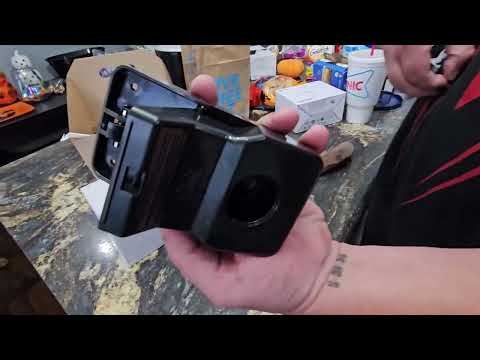
The first feature I examined was the covered bait section. I opened the cover and found the small hole used to push food down into the trap. Once placed, the food sits lower in the recessed compartment, and the cover closes over that area. This was the clearest practical advantage of the design for me: there was no ambiguity about where bait belonged.
That may sound like a small point, but bait placement is part of every mechanical trap’s ownership routine. With an exposed trigger design, a buyer may need to work out how food attaches or rests on the trigger. Here, the bait location was evident as soon as I opened the cover. The trap’s layout directs the user to one specific compartment rather than leaving that choice open-ended.
I also liked that the covered section keeps the bait area integrated into the plastic trap body. The bait is not fully visible on the top surface after the cover is closed. For me, that made the trap look more self-contained than a bare wooden snap trap or an open trigger plate. Whether that matters to you will depend on the setting and your preferred style of trap, but it is the main design difference this product brings to the table.
I would not overstate what the cover does. I did not test whether it protects bait from weather, prevents other animals from reaching food, changes how rodents approach the trap, or makes cleanup easier after a real catch. What I can say is more specific: I loaded food through the opening, the bait sat in a lower recessed space, and contact in that bait area activated the trap during my checks.
Click-to-set action and trigger response
After looking at the bait compartment, I set the trap by pulling its mechanism back. It clicked into position. That click was useful because it gave me a clear indication that the trap had reached the ready state. I did not have to guess whether it was properly set, and I found the action uncomplicated.
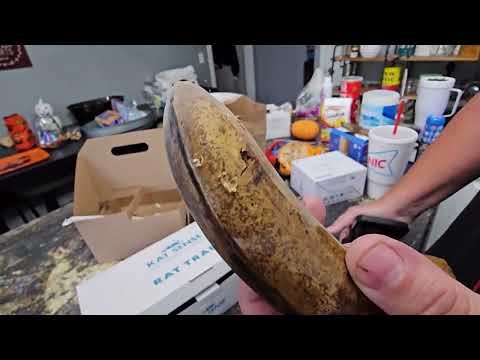
For the trigger check, I used a frozen banana as a stand-in target and bait-test material. When the banana contacted the bait area, the trap snapped shut around it. After opening the trap, I pointed out the marks left on the banana, which I described as teeth marks. The relevant product result was mechanical: the bait-area contact activated the snap mechanism, and the trap closed around the stand-in.
I then opened the trap, removed the banana, reset the mechanism, and repeated the check. It activated again. That second cycle matters because a reusable snap trap should not only set once; it should be practical to reopen and prepare for another use. In my use, the reset did not turn into a complicated process. I could return the trap to its set position with the same pull-back action and clear click.
A frozen banana is not a rat, mouse, or chipmunk, so I do not treat this as a real-world catch test. It does not answer how reliably the trap catches live rodents, how it performs in different placements, or whether it works equally well with every animal in the listing title. It does show that the mechanism activated twice when my stand-in reached the bait area and that I could reset the unit between checks.
How simple is the everyday operating routine?
In my hands, the routine was simple: I opened the bait cover, placed the bait material into the compartment opening, closed the cover, and pulled the mechanism back until it clicked. After the trap activated, I opened it, removed the stand-in material, and reset it for a second check. The main interaction points are easy to recognize: the covered bait area, the pull-back set motion, and the opening action after the trap closes.
That simplicity is this trap’s strongest reason to buy. It is not a complicated pest-control system with multiple settings or a difficult arrangement of exposed components. It is a compact plastic snap trap with a bait compartment that is visually separate from the setting action. If you want a product that makes its basic sequence apparent, this design does that well.
At the same time, this is still a mechanical trap designed to close with force. I would handle it carefully, keep it away from children and pets, and use caution when loading, setting, moving, or opening it. After a catch, I would confirm the animal is probably deceased before releasing it into the trash, as I noted during my use. Follow local disposal requirements and use appropriate hygiene practices for any real pest-control situation.
The practical value of the reset is worth emphasizing. A trap can be easy to set before first use and still be awkward after activation. That was not my experience here. I opened this one after the first trigger check and returned it to the set position for the second. For a shopper seeking a reusable covered bait rat trap, that is a more meaningful ownership detail than the initial click alone.
What my check does and does not answer
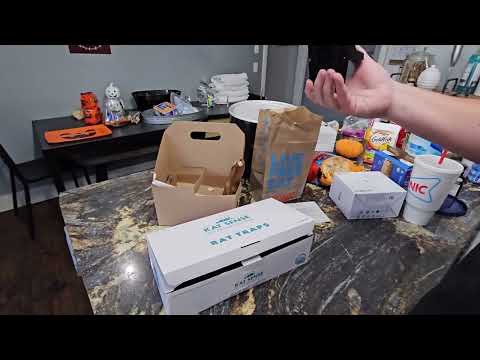
I can confidently speak to the mechanics I used. The bait compartment is covered and recessed, the trap pulled back into a click-to-set position, contact at the bait area made it snap shut around my frozen-banana stand-in, and the product opened and reset for a second activation. Those are useful firsthand details for comparing this model’s layout with another snap trap.
I did not test live catch performance. Rodent size, species, bait choice, trap placement, surrounding conditions, and checking frequency can all matter in actual pest control. I also did not test the trap’s long-term durability, outdoor weather resistance, cleaning after a catch, or performance across all six traps in the retail pack. Buyers who need certainty in those areas should not assume my mechanical check settles them.
The retail title states that this is a six-pack of large reusable snap traps for rats, mice, and chipmunks, intended for indoor or outdoor use. That may help narrow a purchase decision if the pack quantity and stated uses fit your needs. My own observations remain more limited: I used one trap, indoors for the trigger check, and evaluated its operation rather than field results.
I also would not choose any snap trap because I expected a mechanism alone to guarantee outcomes. This product’s appeal is its accessible design, not a broad performance promise. If the key buying question is whether the covered bait layout and click-to-set routine feel more approachable than an open snap trap, my answer is yes. If the key question is long-term real-world catch performance, I cannot make that call from my use.
My recommendation for this covered snap-trap design
I recommend this covered bait rat trap to shoppers who want a straightforward reusable mechanical option and care about having a dedicated place for bait. The recessed compartment was easy to locate and load, the set action gave a clear click, and I was able to trigger, open, and reset the trap twice without a fussy process. Those are meaningful strengths for a basic snap-trap format.
I would be more cautious if your buying decision depends on verified live-animal results, outdoor durability, repeated cleaning, or confirmation that the same trap performs equally well for rats, mice, and chipmunks. Those topics were outside my check. The product listing provides the intended-use context, but I did not independently evaluate those claims.
For the right buyer, the attraction is simplicity rather than complexity. The trap puts food in a covered recessed location, uses a pull-back action to reach the set position, closes when the bait area is contacted, and can be opened for reset. In my use, that sequence worked cleanly and predictably with the frozen-banana stand-in.
+ Pros
- Simple click-to-set mechanical action
- Recessed, covered bait compartment
- Activated and reset successfully in two frozen-banana checks
- Straightforward opening and reset process
! What to know
- This is a manual mechanical snap trap that should be checked and handled carefully after activation.
- The retail listing identifies the product as a six-pack of reusable traps for rats, mice, and chipmunks.
- I checked trigger operation with a frozen banana, not live-animal catch results, outdoor durability, or cleaning over time.
Covered bait rat trap specifications and listing context
The details I directly used were the covered compartment with a food opening, the click-to-set mechanical action, and the opening action after activation. The package quantity, stated target animals, and indoor/outdoor designation below come from the associated retail listing. They are useful buying context, but they are separate from the operational details I checked myself.
Specs
| Spec | Detail |
|---|---|
| Product type | Large reusable snap trap |
| Bait compartment | Covered compartment with food opening |
| Set mechanism | Mechanical click-to-set action |
| Retail listing use | Rats, mice, and chipmunks |
| Retail listing placement | Indoor/outdoor |
| Retail listing quantity | 6 traps |
How I scored the mechanism
My scores reflect ease of operation rather than catch success in the field. Ease of setup scored highest because pulling the trap back produced a clear click at the set position. Bait containment scored well because food sits lower in a covered, recessed section. Trigger operation and everyday simplicity also scored strongly because the mechanism activated twice with my stand-in and reset between checks. I did not score weather resistance, real-catch effectiveness, long-term durability, or cleanup after a real catch.
Scorecard
Clear pull-back action clicks into place.
Food sits in a recessed covered compartment.
Activated and reset in two hands-on checks.
A direct mechanical design without a fussy setup.
Covered bait rat trap FAQ
How do I set this covered bait rat trap?
I loaded bait material into the opening in the recessed compartment, closed the cover, and pulled the mechanism back until it clicked into the set position. Handle the trap cautiously because it is a mechanical snap device.
Does bait sit exposed on this trap?
No. I opened the cover and pushed the bait material down through a small opening. The food sat in a recessed compartment rather than fully exposed on the trap’s upper surface.
Did the trap activate more than once?
Yes. It snapped shut in two frozen-banana trigger checks. I opened and reset it between those checks. That confirms repeated mechanical activation with my stand-in, not live-animal catch results.
Can this trap be reused after it activates?
I opened the trap after the first activation and reset it for a second check. The associated retail listing also identifies the six-trap pack as reusable. I did not assess long-term durability or cleaning after repeated real-world catches.
Is it only for rats?
The retail listing identifies rats, mice, and chipmunks as intended uses. My experience focused on one trap’s bait compartment, set action, trigger response, opening, and reset, so I cannot compare results across those animals.
Can I use it outdoors?
Indoor and outdoor use are stated in the retail listing. I did not leave the trap outdoors or test weather exposure, so I cannot comment on long-term outdoor durability.
Final take
I like this covered bait design because its main operating steps are easy to understand. The bait has a specific recessed location, the trap gives a clear click when set, and I could open and reset it after each of my two trigger checks. For a buyer who wants a reusable snap trap with an enclosed-looking bait layout, that is a worthwhile combination.
Keep the scope in mind: I checked the mechanism with a frozen banana, not live rodents. But if your main priority is a covered bait compartment paired with a direct click-to-set snap action, this is a practical format to consider.
As an Amazon Associate I earn from qualifying purchases.